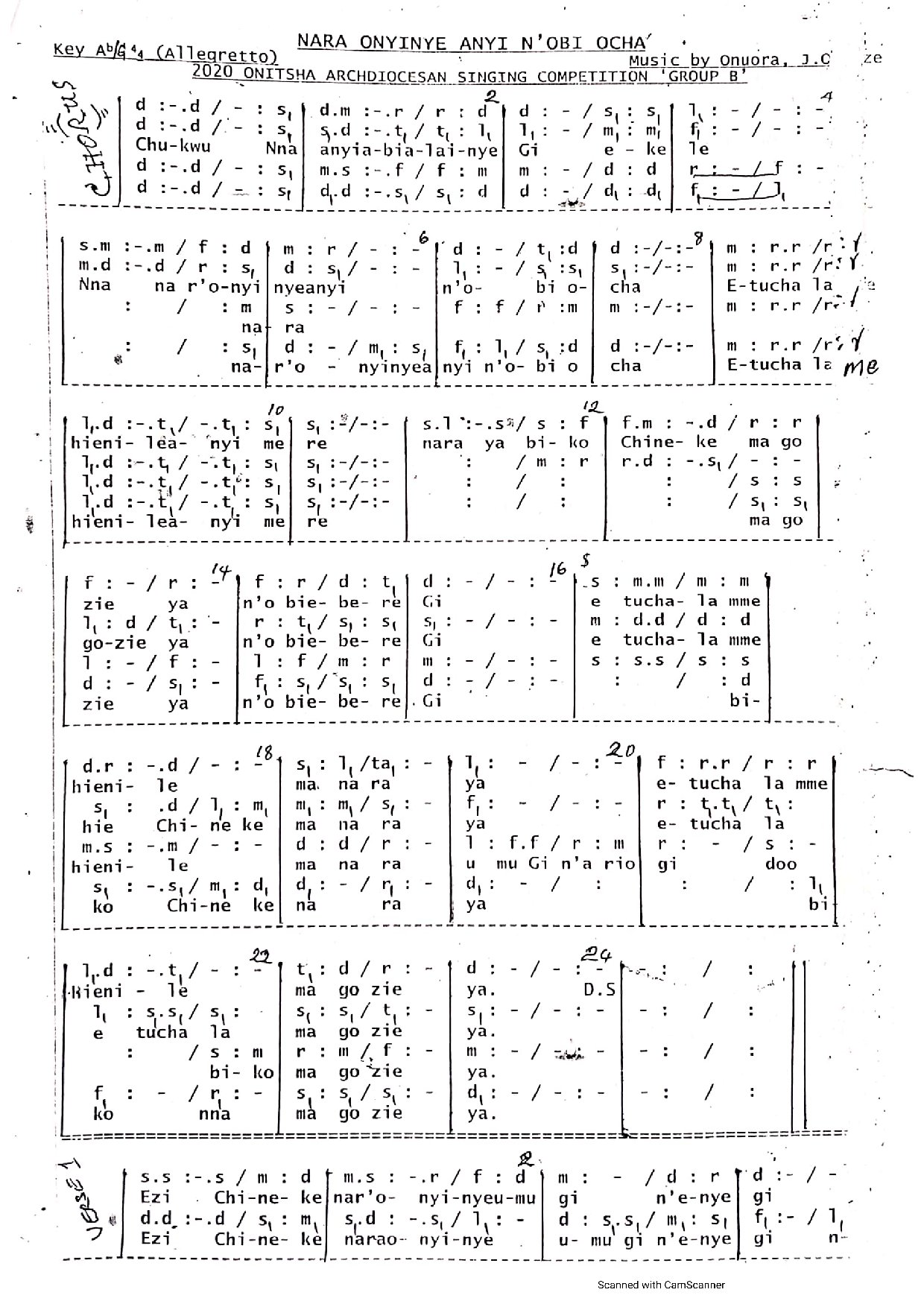
NARA ONYINYE ANYI N'OBI OCHA
Solfa Notation • Consecration, Offertory Hymns, Hymns
Subscribed as
Want Sunday picks sent to another address too?
Your choir should not be left out in what's trending
Sunday mass selections, psalms, and trending songs in your area — straight to your inbox.
NARA ONYINYE ANYI N'OBI OCHA by Onuora, J.C — Lyrics
About NARA ONYINYE ANYI N'OBI OCHA
"Nara Onyinye Anyị N'obi Ọcha" is a joyful and deeply theological Igbo offertory hymn that calls the congregation to bring their gifts to the altar with gratitude. The title evokes a plea for God to accept our offerings with a pure heart, setting a tone of humility and thanksgiving. As the choir leads the faithful in the procession of gifts, the song reminds everyone that whatever we bring—whether bread, wine, or the fruits of our labor—is simply a return of the abundance God has already poured into our lives.
The verses of this piece are rich with scriptural and natural imagery. The first verse draws a direct line to the Eucharistic prayers of the Mass, asking God to receive our offerings just as He accepted the sacrifices of His servant Abel and the high priest Melchizedek. From there, the song shifts to the everyday miracles we often take for granted. The choir sings of the rain, the sun, and the very air we breathe, framing them as free gifts from the Creator.
For a choir director, this song offers a wonderful opportunity to build energy and participation during the Offertory. The final verses serve as a direct, rhythmic call to action, urging the people to rise up and give thanks for the healing and protection God has shown them. It is a piece that moves naturally from solemn petition to an uplifting celebration of God's goodness.