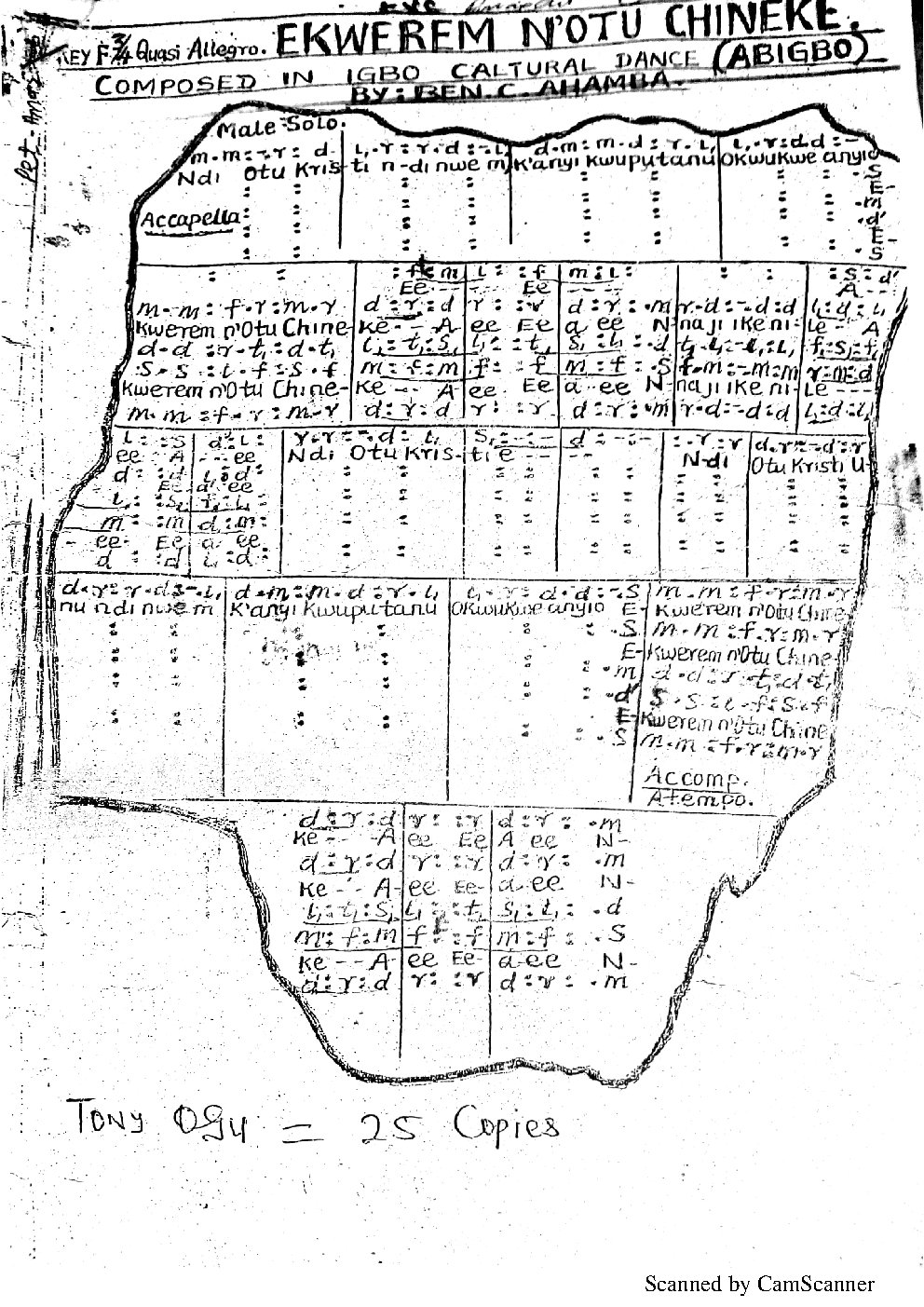
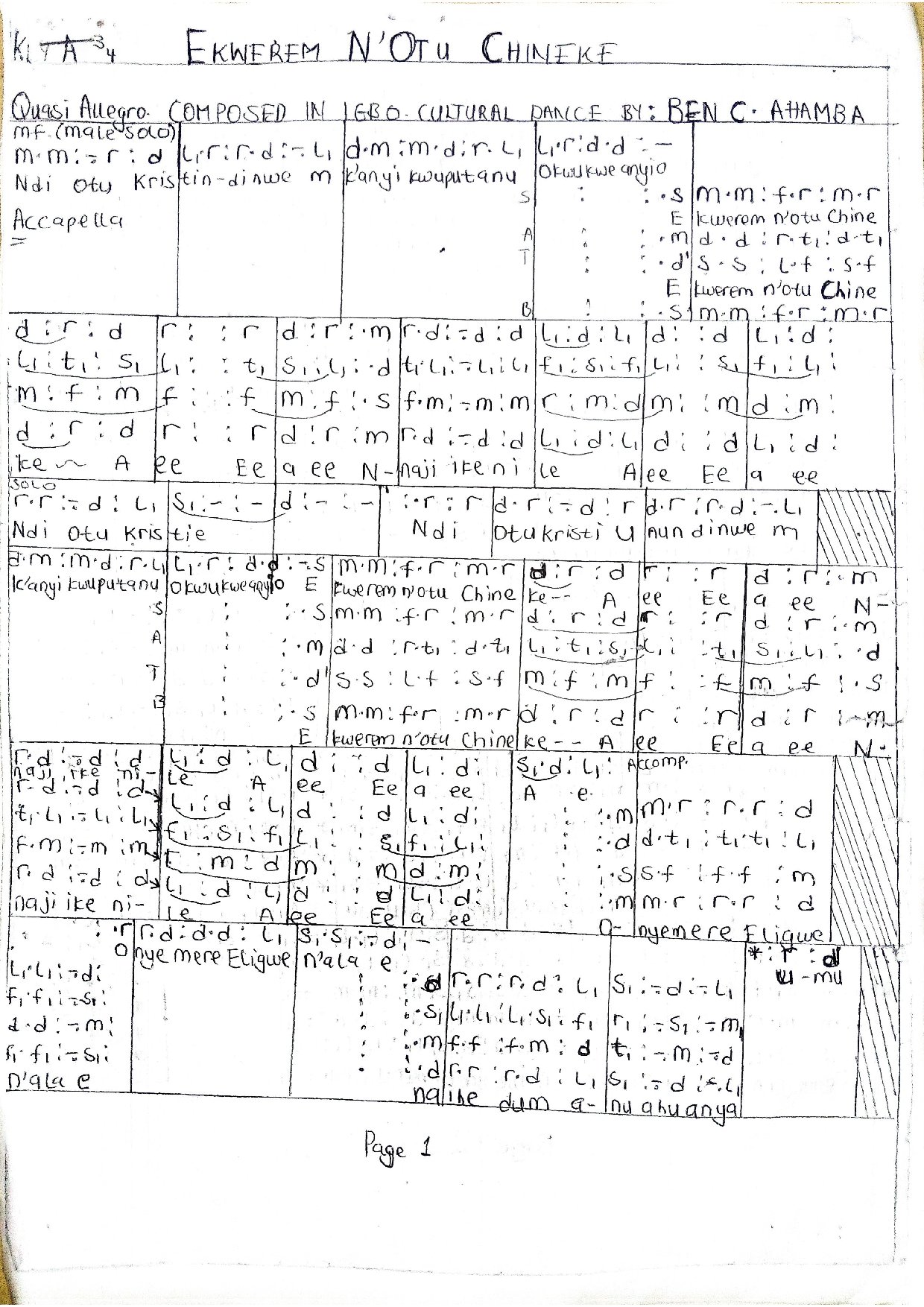
EKWEREM N'OTU CHINEKE
Solfa Notation • Creed (I believe)
Subscribed as
Want Sunday picks sent to another address too?
Your choir should not be left out in what's trending
Sunday mass selections, psalms, and trending songs in your area — straight to your inbox.
EKWEREM N'OTU CHINEKE by Ben. C. Ahamba — Lyrics
About EKWEREM N'OTU CHINEKE
"Ekwerem N'otu Chineke" is a vibrant, rhythmic setting of the Nicene Creed in Igbo, composed by Ben C. Ahamba. Right from the top of the score, the composer notes that this piece is styled after the "Abigbo" cultural dance, and you can feel that traditional energy pulsing through every measure. It opens with a striking solo call, inviting the faithful to profess their faith, before the full choir responds with a resounding, unified declaration of belief in one God.
Singing the Creed can sometimes feel like reciting a long list of doctrines, but this arrangement turns the profession of faith into a joyful, communal celebration. The melody carries the choir through the life of Christ—from His incarnation by the Holy Spirit to His passion, resurrection, and ascension—with a natural, driving momentum. The traditional vocal interjections, like the "A ee Ee a ee" in the opening responses and the emotive "ewo" during the crucifixion narrative, ground the theology deeply in indigenous musical expression.
This piece is perfect for festive Sunday Masses and major solemnities where the congregation and choir are ready to lift their voices with cultural pride. The rhythmic vitality keeps the singers engaged from the first note to the final, cascading "Amens." It is a wonderful way to make the Creed feel less like a formal recitation and more like a living, breathing declaration of faith.