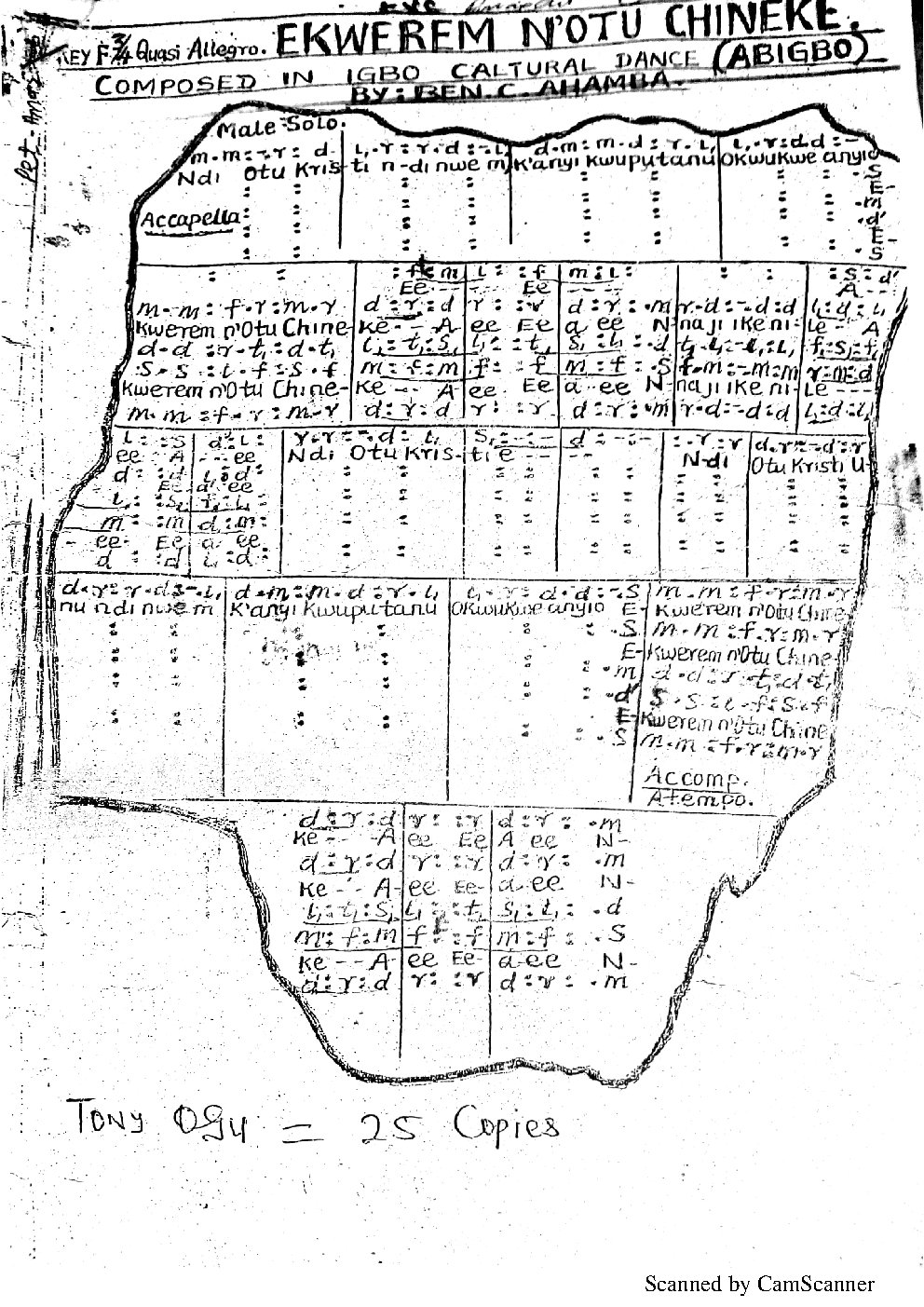
EKWEREM N'OTU CHINEKE
Solfa Notation • Creed (I believe), Mass Settings
Subscribed as
Want Sunday picks sent to another address too?
Your choir should not be left out in what's trending
Sunday mass selections, psalms, and trending songs in your area — straight to your inbox.
EKWEREM N'OTU CHINEKE by BEN. C. AHAMBA — Lyrics
About EKWEREM N'OTU CHINEKE
"Ekwerem N'otu Chineke" is a vibrant and deeply cultural setting of the Nicene Creed, composed by Ben. C. Ahamba. Written specifically in the rhythmic style of the "Abigbo" cultural dance—a celebrated traditional music form native to the Mbaise people of Imo State—this piece transforms the solemn profession of faith into a lively, communal celebration. The driving rhythms and call-and-response elements invite the entire congregation to affirm their beliefs with joy and energy.
In the Catholic Mass, the Creed is the moment where the faithful stand together to declare the core mysteries of their faith. Ahamba’s arrangement captures this unity perfectly. Opening with a stirring male solo that calls the Christian brethren to proclaim their faith ("Ndi otu Kristi... k'anyi kwuputanu okwukwe anyi o"), the choir responds with a rich, rhythmic recitation of the Creed in Igbo. The familiar articles of faith—from the creation of heaven and earth to the resurrection of the dead—are punctuated by traditional vocalizations ("A ee Ee a ee"), grounding the universal prayer firmly in local Nigerian expression.
Choirs typically sing this piece during festive Masses, cultural days, or major liturgical celebrations where indigenous music takes center stage. Its infectious Abigbo rhythm not only keeps the choir loft engaged but also moves the congregation, making the act of professing the faith a truly uplifting and embodied experience.