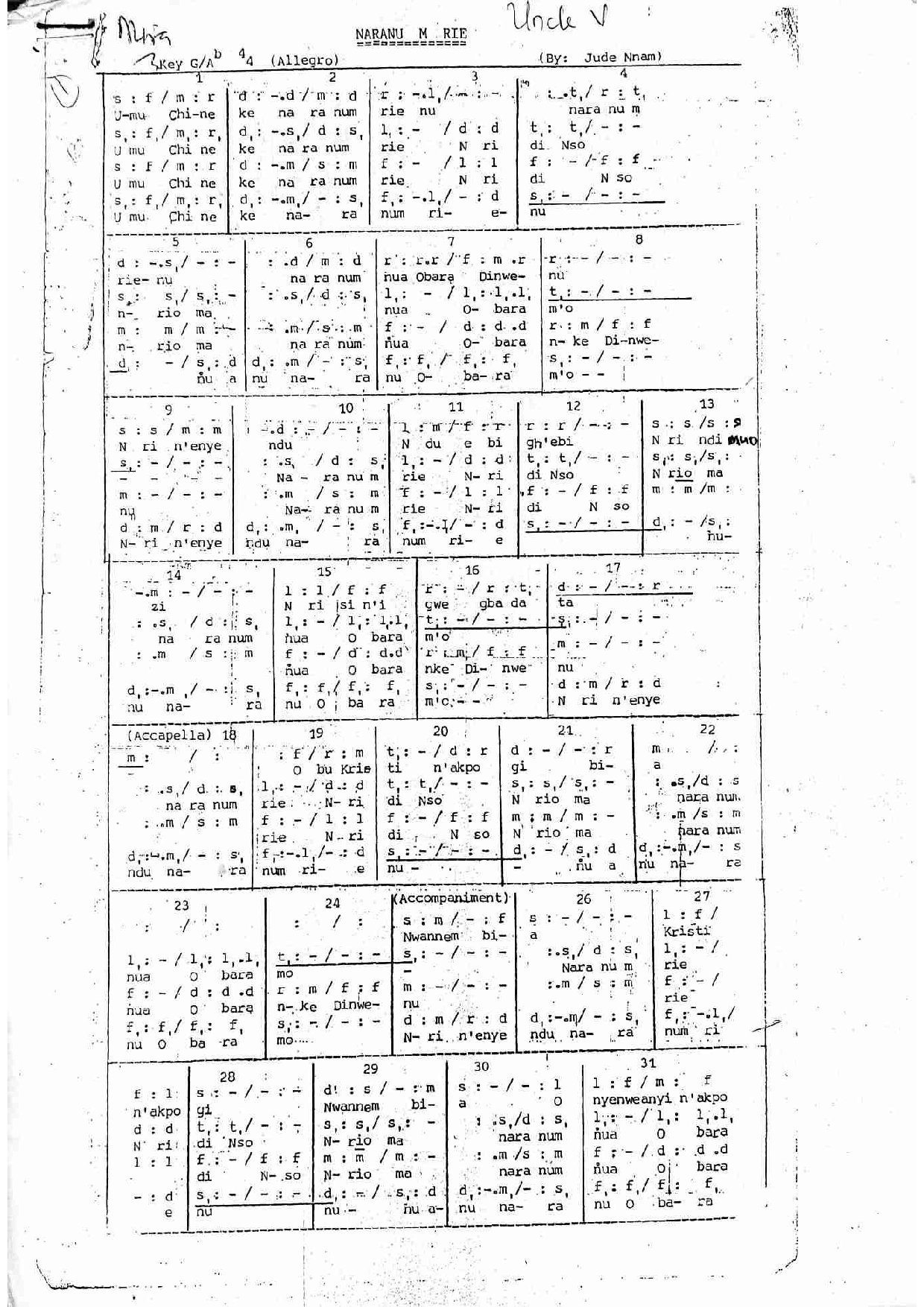
NARANU M RIE
Solfa Notation • Communion Hymns, Hymns
Subscribed as
Want Sunday picks sent to another address too?
Your choir should not be left out in what's trending
Sunday mass selections, psalms, and trending songs in your area — straight to your inbox.
NARANU M RIE by Jude Nnam — Lyrics
About NARANU M RIE
"Naranu M Rie" is a deeply reverent Communion hymn composed by Jude Nnam, widely sung in Nigerian Catholic parishes during the Liturgy of the Eucharist. The title translates to an invitation to "Take and eat," echoing Christ's words at the Last Supper. From the very first measure, the choir calls the congregation—"Umu Chineke" (Children of God)—to come forward and partake in the Body and Blood of Christ.
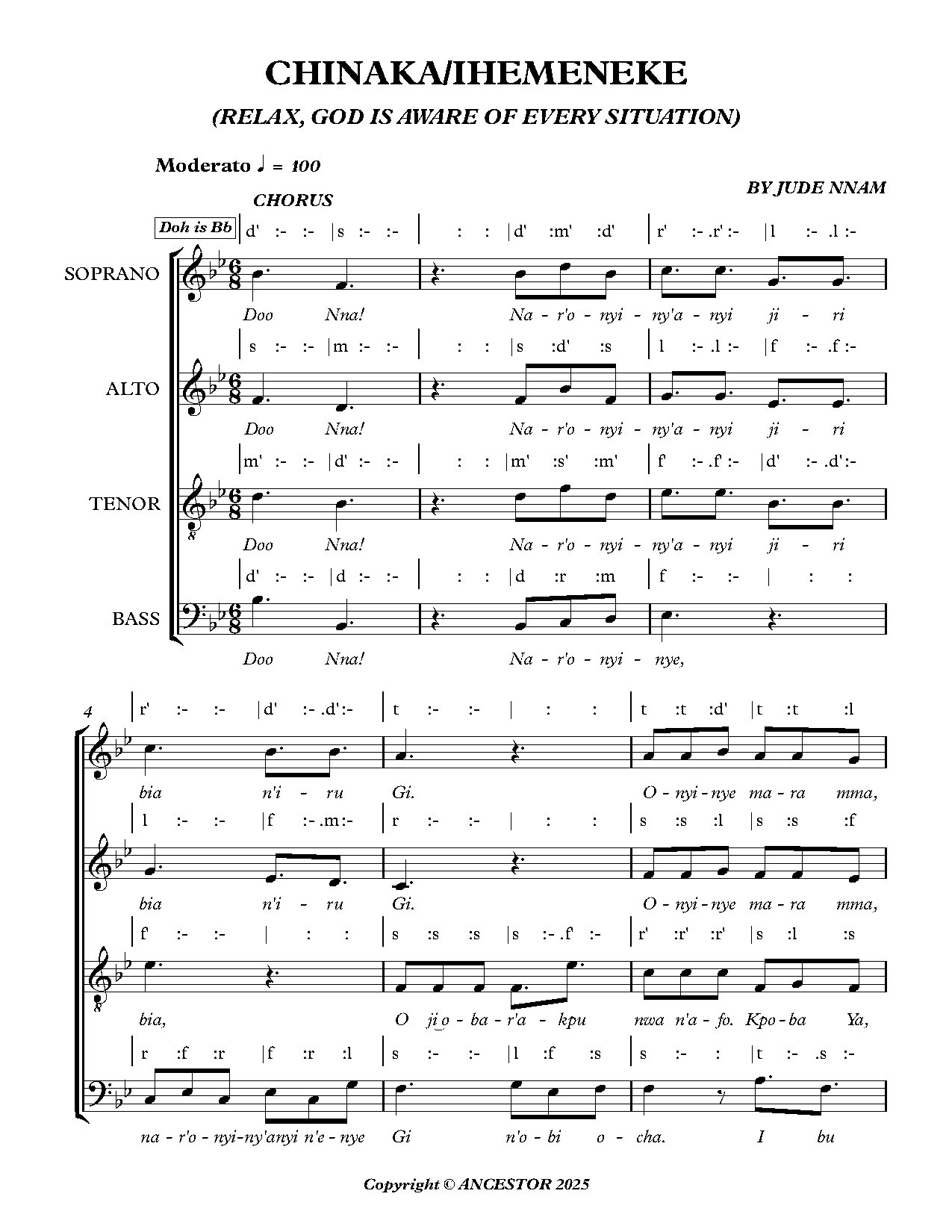
The piece is structured with a rich, polyphonic refrain that weaves the voice parts together in a joyful yet solemn call to the altar. The sopranos lead the invitation to receive the Bread of Life and the Cup of Blessing, while the underlying harmonies create a sense of communal procession. It is a song that perfectly captures the movement of a parish walking together toward the sanctuary to receive Communion.
In the verses, the text reflects on the profound mystery of the Eucharist. The first verse recalls Christ coming down from heaven and suffering for humanity, leaving Himself as the Bread of Life before returning to the Father. The subsequent verses draw a line from the manna given to the Israelites in the desert to the ultimate gift of Jesus Christ. For a choir, singing this piece requires careful attention to the overlapping entries in the refrain, but the result is a deeply moving meditation that anchors the congregation in the sacredness of the Mass.