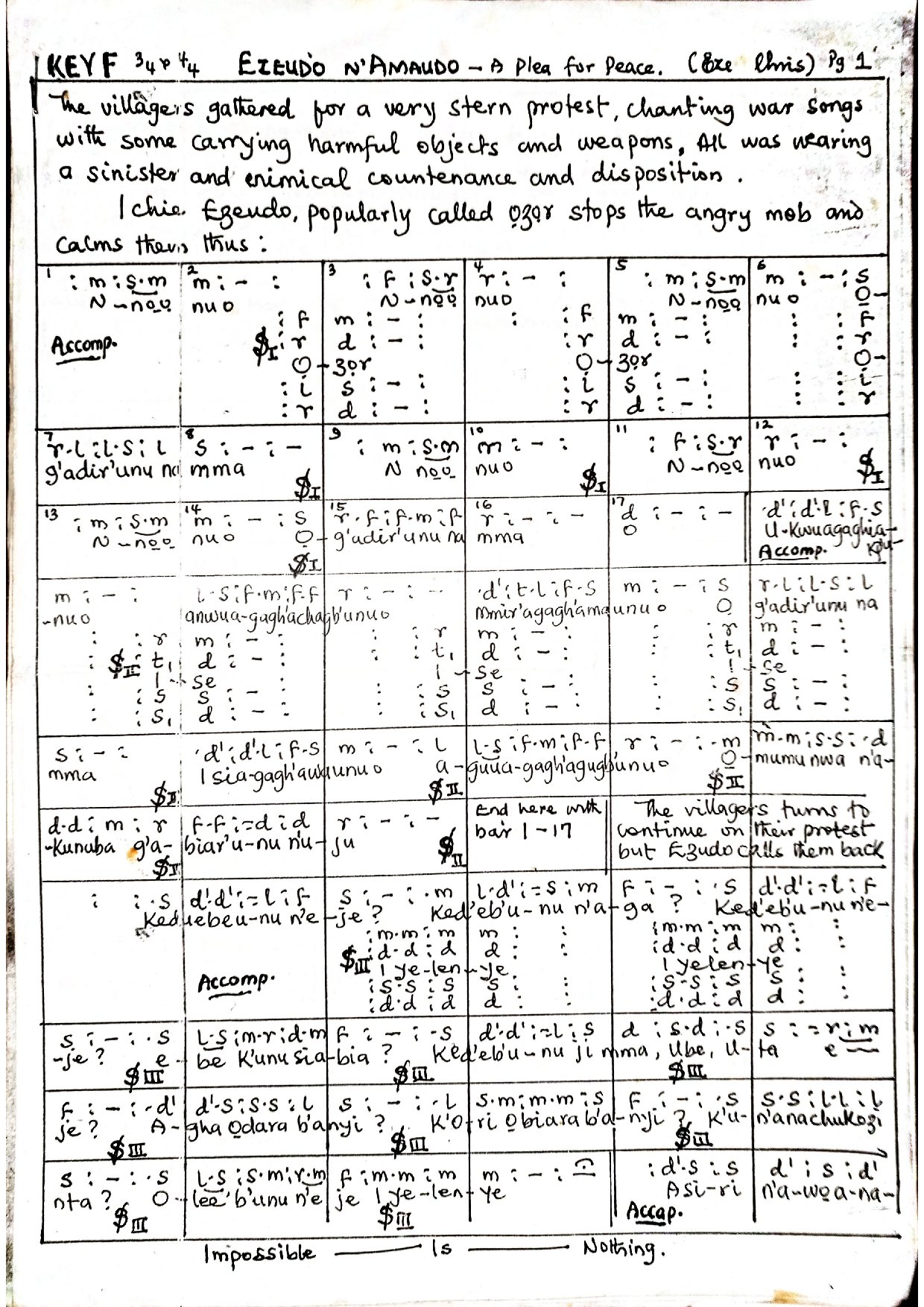
Ezeudo n'Amaudo - a Plea for Peace.
Solfa Notation • Folk songs, Concert, Non-Liturgical / Special Choir Arrangements
Subscribed as
Want Sunday picks sent to another address too?
Your choir should not be left out in what's trending
Sunday mass selections, psalms, and trending songs in your area — straight to your inbox.
Ezeudo n'Amaudo - a Plea for Peace. by Coxe Chris — Lyrics
About Ezeudo n'Amaudo - a Plea for Peace.
"Ezeudo n’Amaudo" (A Plea for Peace) is a captivating Nigerian choral folk drama composed by Eze Chris. Rather than a standard liturgical hymn, this piece is a vibrant musical narrative that brings a traditional village scene to life right in the choir loft. It tells the story of an angry mob of villagers marching in protest, armed and furious over a dispute with their king, only to be intercepted by the wise and respected elder, Ichie Ezeudo.
The music shifts dynamically between the characters in this unfolding drama. We hear Ezeudo’s soothing, melodic attempts to calm the crowd ("Nnọọ nụ o... g'adịr'ụnụ na mma"), blessing them with peace, life, and prosperity to cool their tempers. The choir then takes on the voice of the agitated villagers, explaining their grievance about the king tying a goat by the wrong end—a classic Igbo proverb and metaphor for an injustice that has provoked their wrath.
Choirs typically perform this piece during cultural concerts, special presentations, or folk song competitions rather than during Mass. It requires expressive acting, sharp dynamic contrasts, and a deep understanding of Igbo storytelling traditions. The strength of the song lies in its powerful message of conflict resolution, reminding the audience that patience and dialogue ("Iwe ụnụ dajụọ") are always better than the heat of anger.