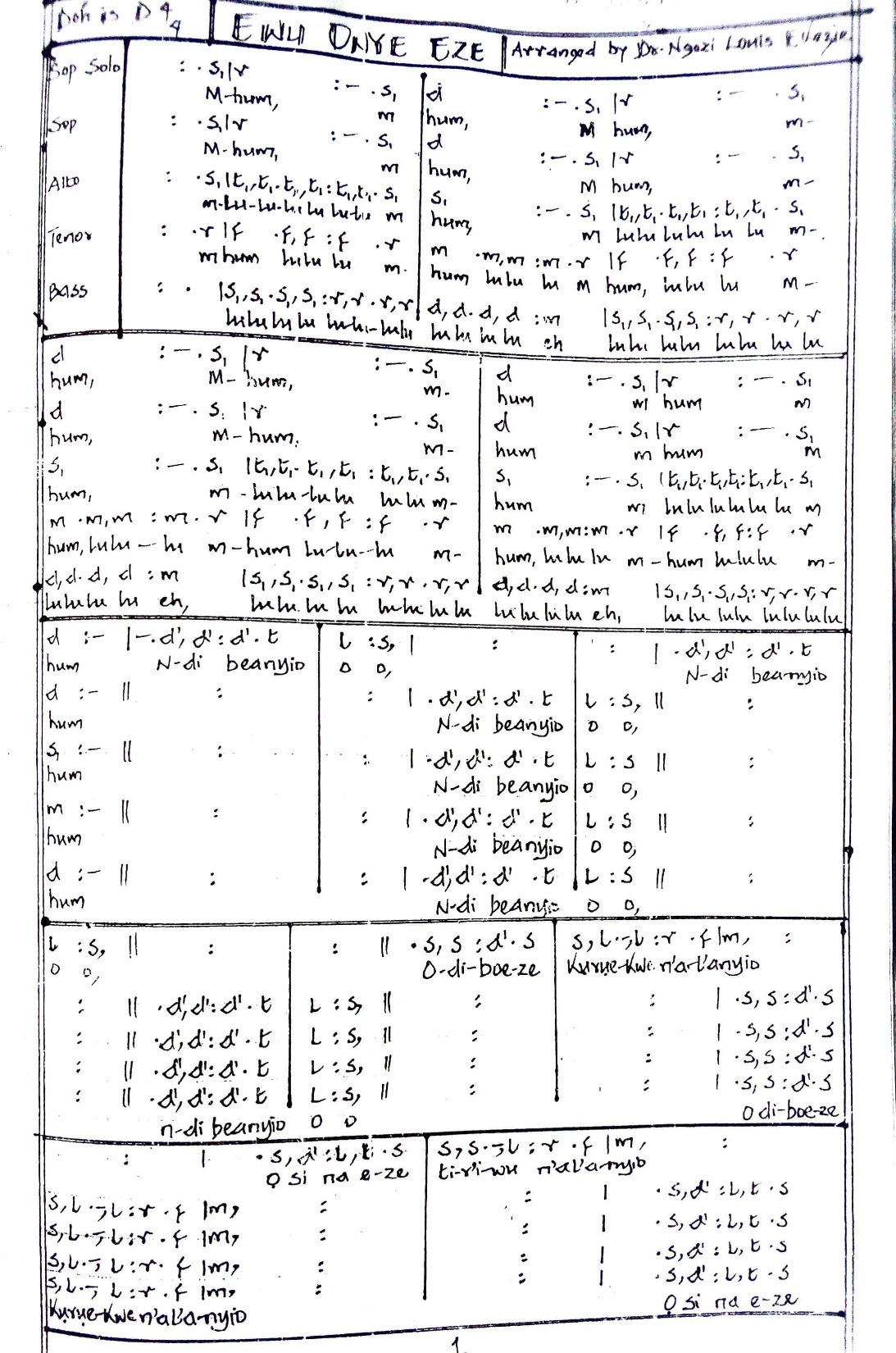
EWU ONYE EZE
Solfa Notation • Folk songs, Concert, Non-Liturgical / Special Choir Arrangements
Subscribed as
Want Sunday picks sent to another address too?
Your choir should not be left out in what's trending
Sunday mass selections, psalms, and trending songs in your area — straight to your inbox.
EWU ONYE EZE by Ngozi Louis Ekezie — Lyrics
About EWU ONYE EZE
"Ewu Onye Eze" is a captivating choral arrangement that brings a traditional Igbo folk narrative into the choir loft. Arranged by Dr. Ngozi Louis Ekezie, the piece tells a vivid story of power, justice, and divine intervention. The lyrics recount the tale of the king's goat wandering into an old woman's farm, sparking a conflict where the powerful attempt to bend the rules. It is a song that immediately grabs the attention of the audience, blending storytelling with rich, rhythmic harmonies.
Choirs often perform this piece during concerts, cultural days, or special social gatherings rather than during the Mass itself. The music carries a lively, dramatic energy, with the voices weaving together to express the tension and eventual resolution of the story. The rhythmic drive and the call-and-response feel make it a joy to sing and a favorite for choirs looking to showcase their dynamic range and cultural roots.
What makes the song truly moving is its concluding message of hope and ultimate justice. After detailing the struggles of the poor against the powerful, the lyrics turn to God as the final judge: "Chukwu, iwu obodo bụ maka ụmụ ogbenye... Ọ bụ ya g'ekpe ikpe na njedebe, ogbenye ṅụrịwa" (God, the law of the land is for the poor... He is the one who will judge in the end, and the poor will rejoice). This profound trust in divine fairness resonates deeply with both the singers and the listeners, turning a simple folk tale into a powerful prayer for equity.