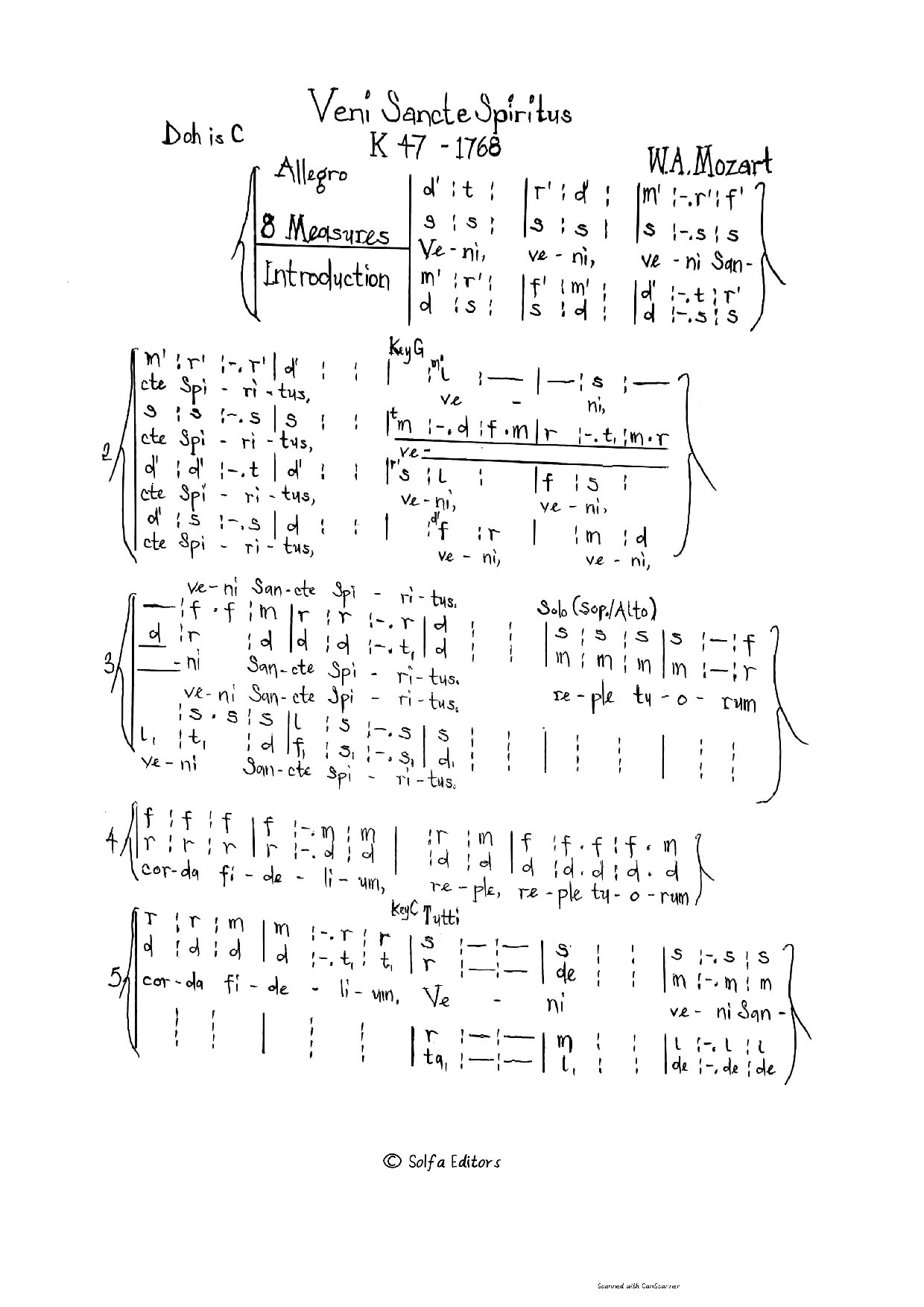
Veni Sancte Spiritus K 47 - 1768 - Choir Script PDF Thumbnail
Preview
0 0
12 downloads
Added Sep 28, 2025
Uploaded By: Choir PDFs
Format: Solfa
Language: Latin
Pages: 6 pages
Veni Sancte Spiritus K 47 - 1768 by Wolfgang Amadeus Mozart — Lyrics

[Tutti] Veni, veni, veni Sancte Spiritus, veni, veni, veni Sancte Spiritus. [Solo (Sop./Alto)] Reple tuorum corda fidelium, reple, reple tuorum [Tutti] Corda fidelium. Veni veni Sancte Spiritus, veni, veni Sancte Spiritus, et tui amoris in eis ignem, in eis ignem accende, et tui amoris in eis ignem accende, et tui amoris ignem, in eis accende: qui per diversitatem linguarum cunctarum, gentes in unitate, in unitate fidei, gentes in unitate, in unitate fidei congregasti. Veni, veni Sancte Spiritus. Veni, veni Sancte Spiritus. [Solo (Alto & Ten.)] Reple tuorum corda fidelium. [Tutti] Veni, veni, et tui amoris in eis ignem accende, in eis ignem accende, et tui amoris in eis ignem accende. Reple, accende. Veni Sancte Spiritus. Veni Sancte Spiritus. Veni, veni. [Presto] Alleluja, alleluja, alleluja, alleluja, alleluja, alleluja. Alleluja, alleluja, alleluja, alleluja. Alleluja, alleluja, alleluja, alleluja. [Solo (Sop. & Alto)] Alleluja, allelujah. [Tutti]
Read full lyrics

About Veni Sancte Spiritus K 47 - 1768

When a choir takes on Mozart’s "Veni Sancte Spiritus," they are stepping into one of the most vibrant and energetic prayers to the Holy Spirit. Written for the classical choral repertoire, this piece is a favorite for Pentecost Sunday or the solemn moments of an ordination Mass. It moves past the quiet, meditative chants we often associate with the Holy Spirit and instead bursts forward with a bright, urgent call: "Veni, veni" (Come, come).

The text itself is a powerful invocation, asking the Spirit to fill the hearts of the faithful and kindle the fire of divine love within them ("reple tuorum corda fidelium... ignem accende"). As you sing through the score, you can feel the momentum building. Mozart uses the different voice parts to echo this gathering energy, shifting from full choir sections to brief, delicate solos for the sopranos and altos, or tenors and basses, before bringing everyone back together.

The final section of the motet shifts into a rapid, joyful "Alleluja." Here, the voices trade the melody back and forth in a lively exchange that feels like a true celebration of the Spirit's arrival. For a Nigerian Catholic choir, mastering the swift runs and classical phrasing of this piece takes serious rehearsal, but the result is a breathtaking offering that lifts the entire congregation into the joy of the feast.