This edition was prepared by Gerd Eichler — free to download, print, rehearse and perform.
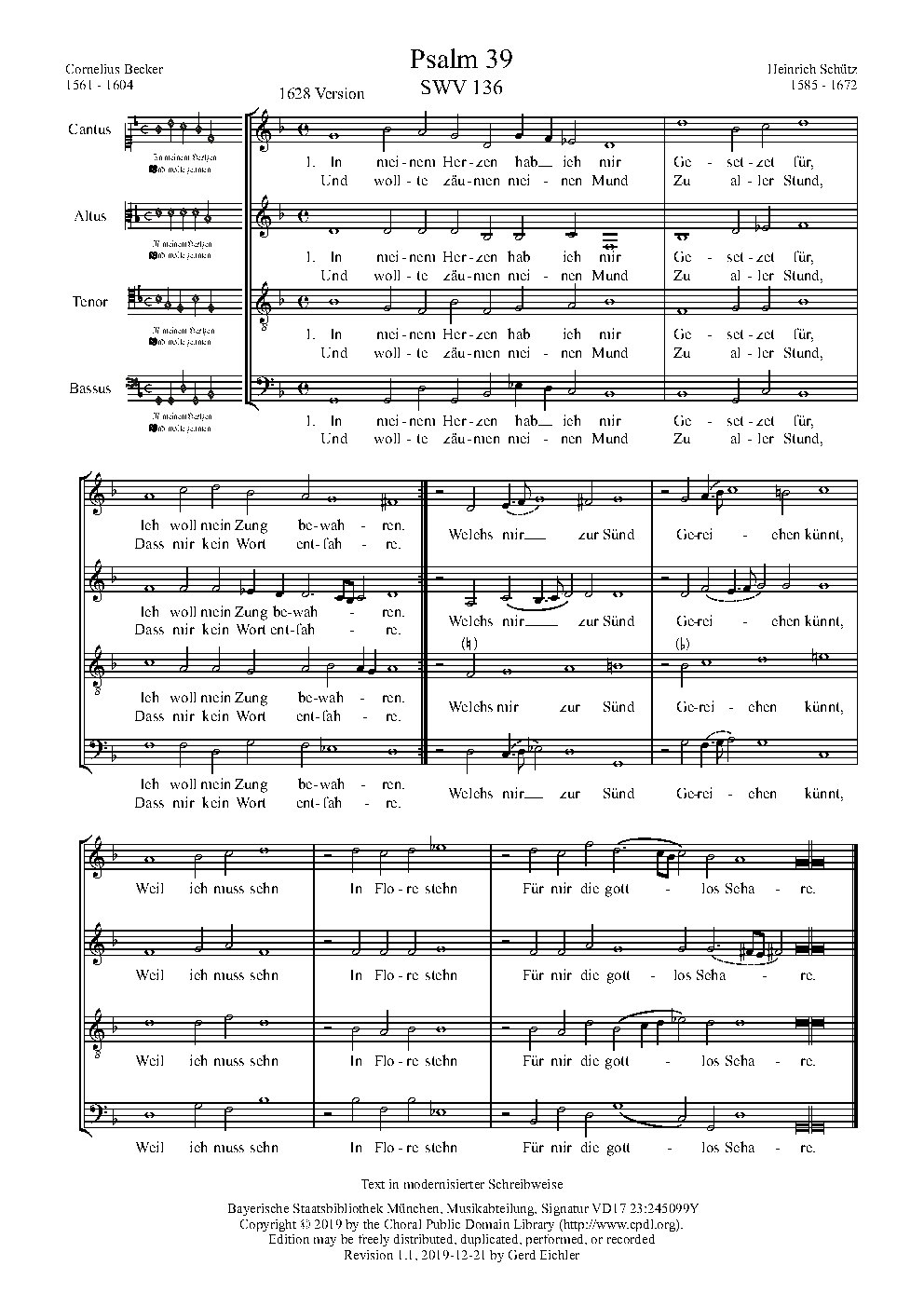
In meinem Herzen hab ich mir, SWV 136
Staff Notation • Sacred, Hymns
Preview
0
0
5 editions of this piece
Different typesettings and voicings of the same work. This page shows the main edition; the others are below.
Subscribed as
Want Sunday picks sent to another address too?
Free weekly email
Your choir should not be left out in what's trending
Sunday mass selections, psalms, and trending songs in your area — straight to your inbox.
In meinem Herzen hab ich mir, SWV 136 by Heinrich Schütz — Lyrics
In finem, ipsi Idithun. Canticum David.
Dixi: Custodiam vias meas:
ut non delinquam in lingua mea.
Posui ori meo custodiam,
cum consisteret peccator adversum me.
Obmutui, et humiliatus sum, et silui a bonis;
et dolor meus renovatus est.
Concaluit cor meum intra me;
et in meditatione mea exardescet ignis.
Locutus sum in lingua mea:
Notum fac mihi, Domine, finem meum,
et numerum dierum meorum quis est, ut sciam quid desit mihi.
Ecce mensurabiles posuisti dies meos,
et substantia mea tamquam nihilum ante te.
Verumtamen universa vanitas, omnis homo vivens.
Verumtamen in imagine pertransit homo;
sed et frustra conturbatur:
thesaurizat et ignorat cui congregabit ea.
Read full lyrics
About In meinem Herzen hab ich mir, SWV 136
Heinrich Schütz's motet In meinem Herzen hab ich mir, SWV 136, draws from the rich tradition of German sacred music. This setting for SATB choir uses both Latin and German text, reflecting the composer's engagement with contemporary musical and linguistic practices. The Latin phrases, primarily from Psalm 39, explore profound themes of human frailty, the contemplation of mortality, and a plea for divine understanding. Schütz masterfully crafts the vocal lines to convey the introspection and devotional intensity of the text, creating a moving experience for both performers and listeners. The motet stands as a significant example of Schütz's expressive sacred vocal writing.