This edition was prepared by Gerd Eichler — free to download, print, rehearse and perform.
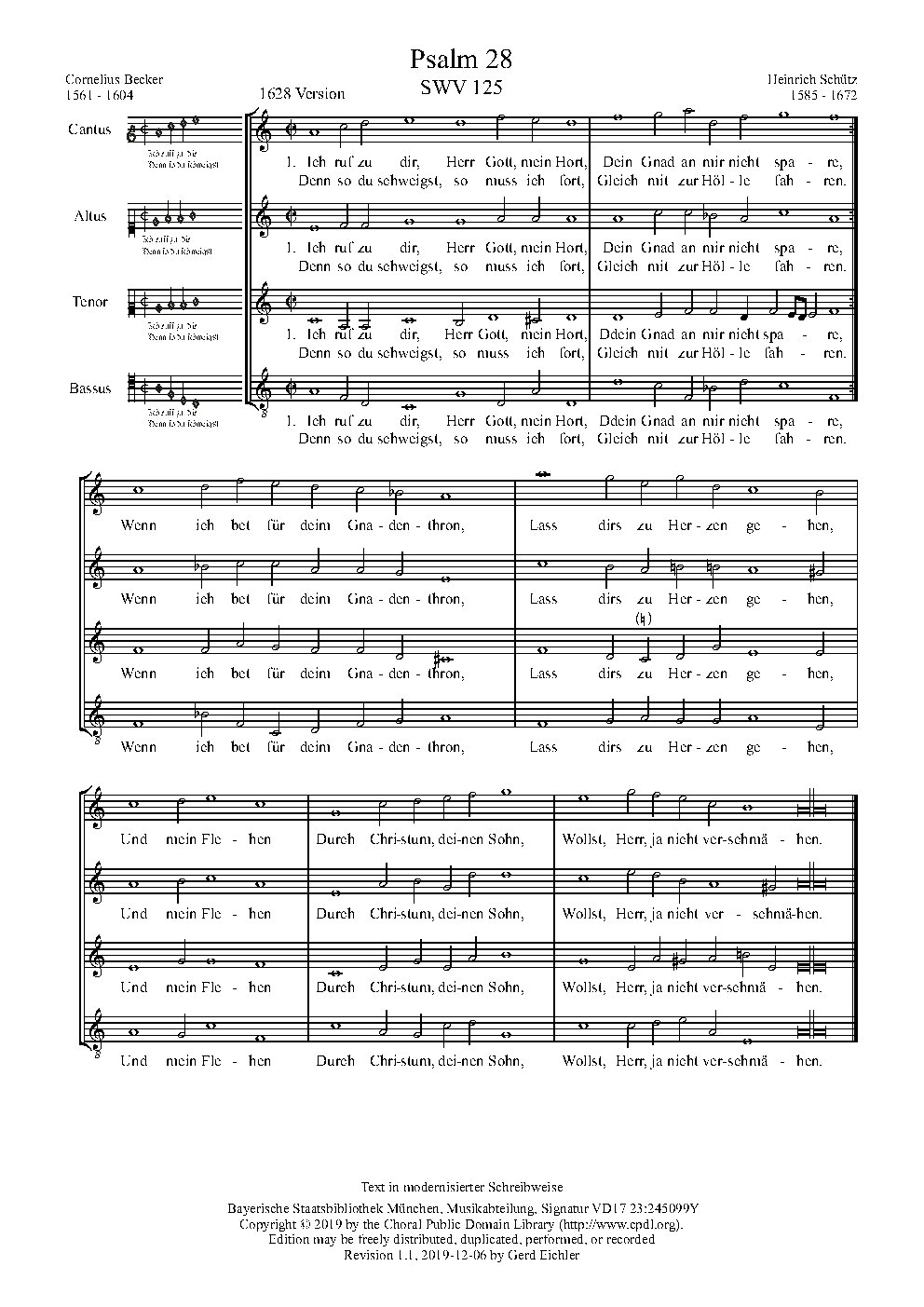
Ich ruf zu dir, Herr Gott, mein Hort, SWV 125
Staff Notation • Sacred, Hymns
Preview
0
0
9 editions of this piece
Different typesettings and voicings of the same work. This page shows the main edition; the others are below.
Subscribed as
Want Sunday picks sent to another address too?
Free weekly email
Your choir should not be left out in what's trending
Sunday mass selections, psalms, and trending songs in your area — straight to your inbox.
Ich ruf zu dir, Herr Gott, mein Hort, SWV 125 by Heinrich Schütz — Lyrics
Psalmus ipsi David. Ad te, Domine, clamabo; Deus meus, ne sileas a me: nequando taceas a me, et assimilabor descendentibus in lacum.
Exaudi, Domine, vocem deprecationis meae dum oro ad te; dum extollo manus meas ad templum sanctum tuum.
Ne simul trahas me cum peccatoribus, et cum operantibus iniquitatem ne perdas me; qui loquuntur pacem cum proximo suo, mala autem in cordibus eorum.
Da illis secundum opera eorum, et secundum nequitiam adinventionum ipsorum. Secundum opera manuum eorum tribue illis; redde retributionem eorum ipsis.
Quoniam non intellexerunt opera Domini, et in opera manuum ejus destrues illos, et non aedificabis eos.
Read full lyrics
About Ich ruf zu dir, Herr Gott, mein Hort, SWV 125
Heinrich Schütz's Ich ruf zu dir, Herr Gott, mein Hort, SWV 125, is a powerful setting for SATB choir. While the title and some of the text are in German, the work draws on a Latin Psalm, the 28th, which forms the basis for the liturgical expression. The psalm speaks of a fervent prayer for divine protection against enemies and evildoers, a plea for God not to turn away from the supplicant. Schütz, a towering figure in German Baroque music, crafts a response that is both deeply personal and universally resonant. The SATB voicing allows for rich harmonic textures, effectively conveying the dramatic supplications and the ultimate hope for divine intervention found within the sacred text.