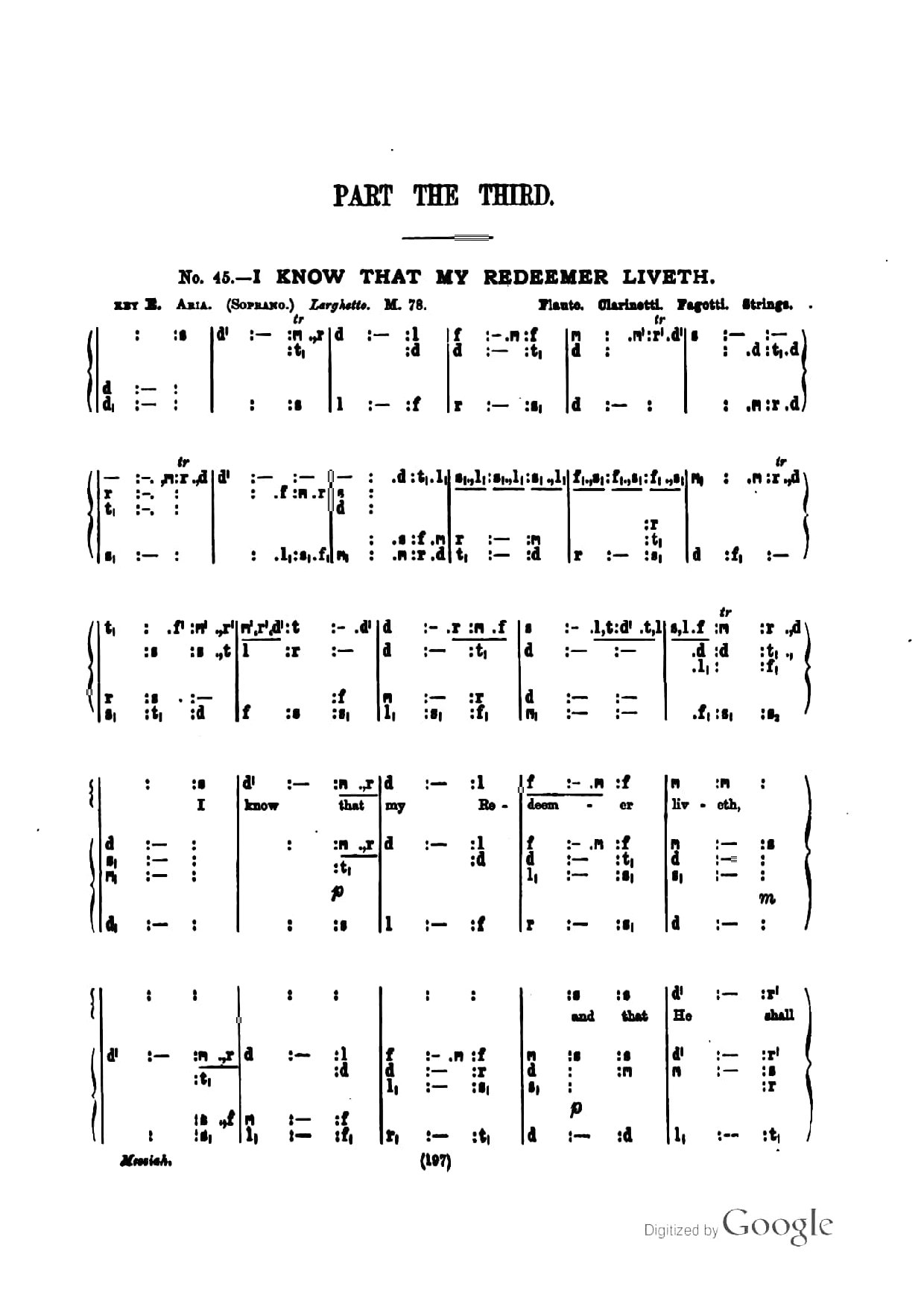
I Know That My Redeemer Liveth
Solfa Notation • Easter Hymns, Classicals, Burial / Funeral Hymns
Subscribed as
Want Sunday picks sent to another address too?
Your choir should not be left out in what's trending
Sunday mass selections, psalms, and trending songs in your area — straight to your inbox.
About I Know That My Redeemer Liveth
"I Know That My Redeemer Liveth" is one of the most profound and recognizable soprano arias in the classical choral repertoire, opening the third part of Handel's Messiah. The text, drawn from the Book of Job and First Corinthians, moves away from the dramatic choruses of the earlier sections into a deeply personal, unwavering declaration of faith. For a soloist, singing this piece is an exercise in breath control, phrasing, and emotional restraint, allowing the sheer certainty of the words to shine through the graceful, soaring melody.
In our Nigerian choir lofts, this aria holds a special place during the Easter season and at solemn funeral Masses. When the soprano delivers that opening rising line, "I know that my Redeemer liveth," it brings a profound stillness to the congregation. It is a moment of pure comfort and conviction, reminding everyone present that death is not the end. The transition in the text to "For now is Christ risen from the dead" shifts the mood from quiet trust to quiet triumph, making it a perfect reflection for the Resurrection.
Tackling a piece from Messiah is always a milestone for any choir or soloist. Singing it in solfa notation, as presented here, allows our choristers to master the intricate classical intervals and timing. It is a glorious offering of classical sacred music that elevates the liturgy and leaves a lasting echo of hope in the hearts of the faithful.