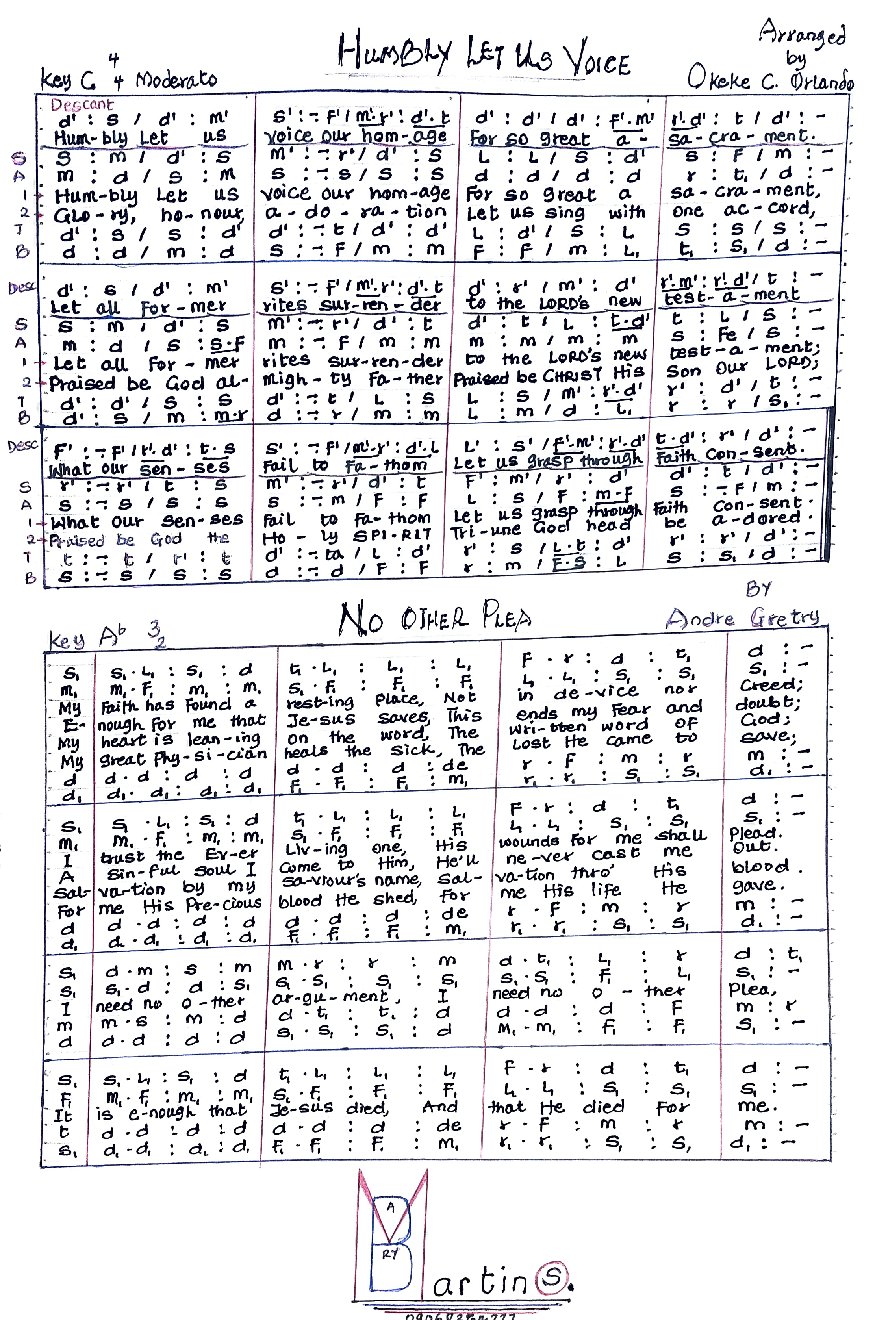
Humbly Let Us Voice & No Other Plea - Choir Script PDF Thumbnail
Preview
0 0
1 downloads
Added Jul 31, 2026
Uploaded By: Choir PDFs
Format: Solfa
Language: English
Pages: 1 page
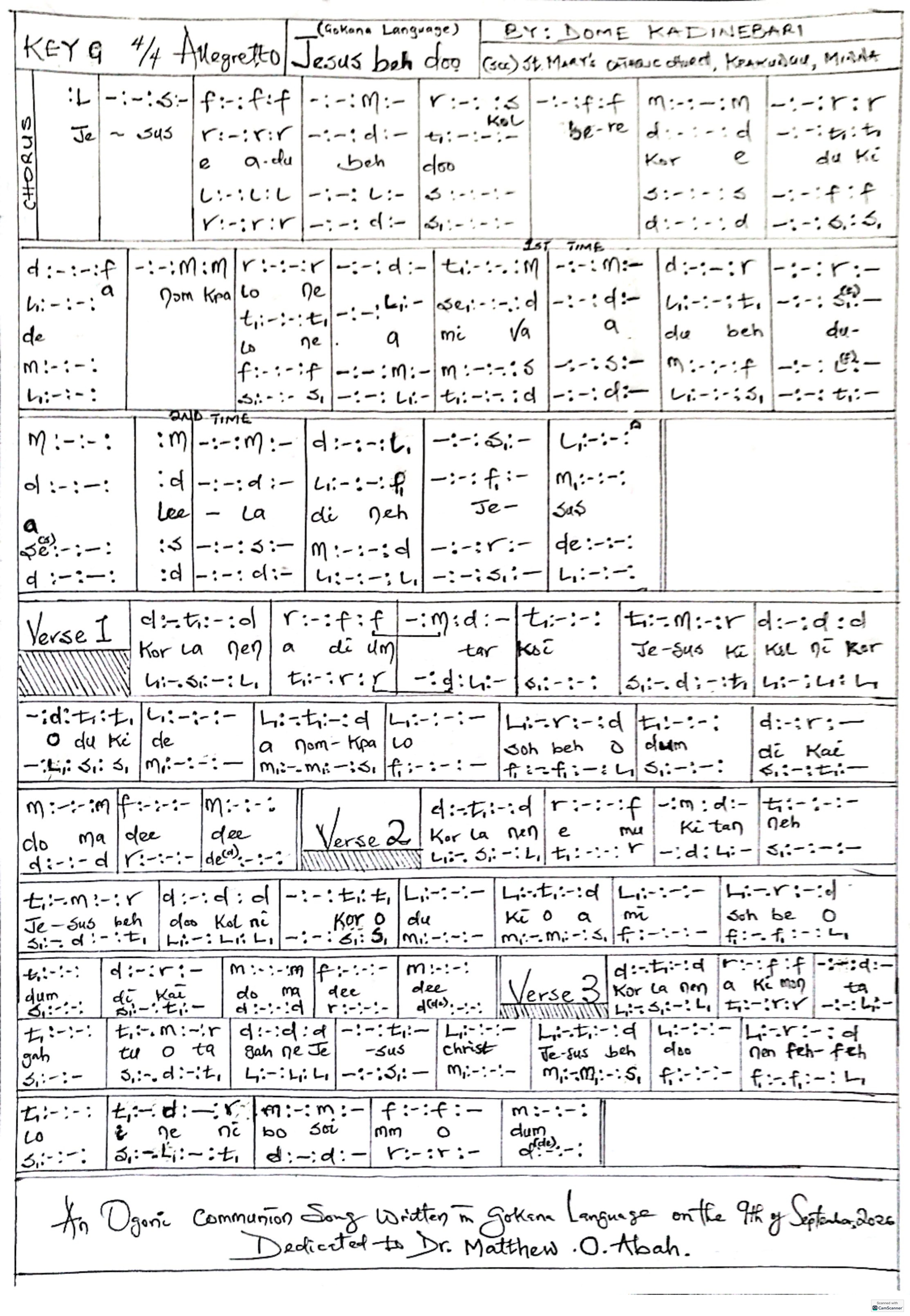
Humbly Let Us Voice & No Other Plea by Okeke C. Orlando & Andre Gretry — Lyrics

HUMBLY LET US VOICE VERSE 1 Humbly let us voice our homage For so great a sacrament. Let all former rites surrender To the Lord's new testament; What our senses fail to fathom Let us grasp through faith consent. VERSE 2 Glory, honour, adoration Let us sing with one accord, Praised be God almighty Father Praised be Christ His Son our Lord; Praised be God the Holy Spirit Triune Godhead be adored. NO OTHER PLEA VERSE 1 My faith has found a resting place, Not in device nor creed; I trust the Ever Living One,
Read full lyrics

About Humbly Let Us Voice & No Other Plea

This sheet brings together two distinct hymns of faith and devotion, often used during quiet, reflective moments in worship. The first, "Humbly Let Us Voice," is a well-known English translation of the Tantum Ergo. Choirs typically sing this during Benediction and Adoration of the Blessed Sacrament. The words call the congregation to bow before the mystery of the Eucharist, asking that faith might supply what human senses cannot grasp. Its second verse provides the traditional doxology to the Holy Trinity, closing out periods of solemn prayer with a unified voice of praise.

The second piece, "No Other Plea," is a setting of the classic hymn "My Faith Has Found a Resting Place." It shifts the mood to one of deep, personal trust in Christ's saving work. Rather than relying on human devices or complex arguments, the lyrics rest entirely on the sacrifice of Jesus. The recurring refrain, "I need no other argument, I need no other plea," makes it a fitting choice for Communion or penitential services, where the focus is on grace and forgiveness.

Printed together in tonic sol-fa, these arrangements offer a choir two accessible, four-part harmony options for Mass. One draws the parish into the communal mystery of the altar, while the other offers a quiet, reassuring confession of individual faith.