This edition was prepared by Gerd Eichler — free to download, print, rehearse and perform.
Herr, dich lob die Seele mein, SWV 202
Staff Notation • Sacred, Hymns
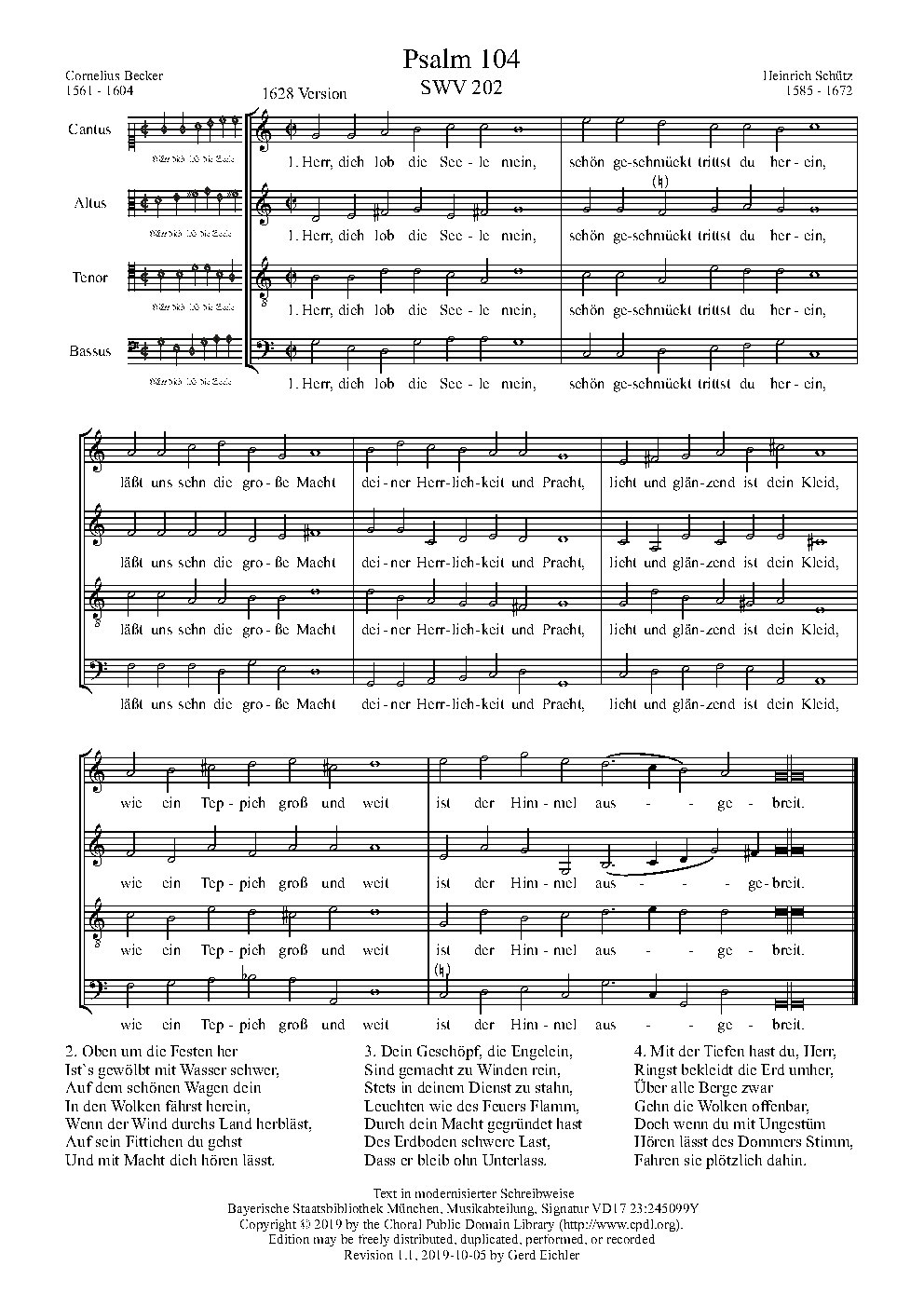
Preview
0
0
5 editions of this piece
Different typesettings and voicings of the same work. This page shows the main edition; the others are below.
Subscribed as
Want Sunday picks sent to another address too?
Free weekly email
Your choir should not be left out in what's trending
Sunday mass selections, psalms, and trending songs in your area — straight to your inbox.
Herr, dich lob die Seele mein, SWV 202 by Heinrich Schütz — Lyrics
Ipsi David. Benedic, anima mea, Domino:
Domine Deus meus, magnificatus es vehementer. Confessionem et decorem induisti,
amictus lumine sicut vestimento.
Extendens caelum sicut pellem,
qui tegis aquis superiora ejus:
qui ponis nubem ascensum tuum;
qui ambulas super pennas ventorum:
qui facis angelos tuos spiritus,
et ministros tuos ignem urentem.
Qui fundasti terram super stabilitatem suam:
non inclinabitur in saeculum saeculi.
Abyssus sicut vestimentum amictus ejus;
super montes stabunt aquae.
Ab increpatione tua fugient;
a voce tonitrui tui formidabunt.
Ascendunt montes, et descendunt campi,
in locum quem fundasti eis.
Terminum posuisti quem non transgredientur,
neque convertentur operire terram.
Qui emittis fontes in convallibus;
inter medium montium pertransibunt aquae.
Potabunt omnes bestiae agri;
expectabunt onagri in siti sua.
Super ea volucres caeli habitabunt;
Read full lyrics
About Herr, dich lob die Seele mein, SWV 202
Heinrich Schütz's Herr, dich lob die Seele mein, SWV 202, is a powerful setting for SATB choir. The music opens with a dignified and majestic character, reflecting the grandeur of the sacred text. Schütz employs a rich contrapuntal texture that builds and releases, mirroring the unfolding praise and awe found in the lyrics. The German text, a paraphrase of Psalm 104, describes the majesty of God's creation, from the heavens and clouds to the earth and seas. The composer masterfully uses the vocal lines to convey the immense power and beauty of the divine, creating a deeply moving choral experience. This work stands as a significant example of German sacred music from its era.