This edition was prepared by James Gibb — free to download, print, rehearse and perform.
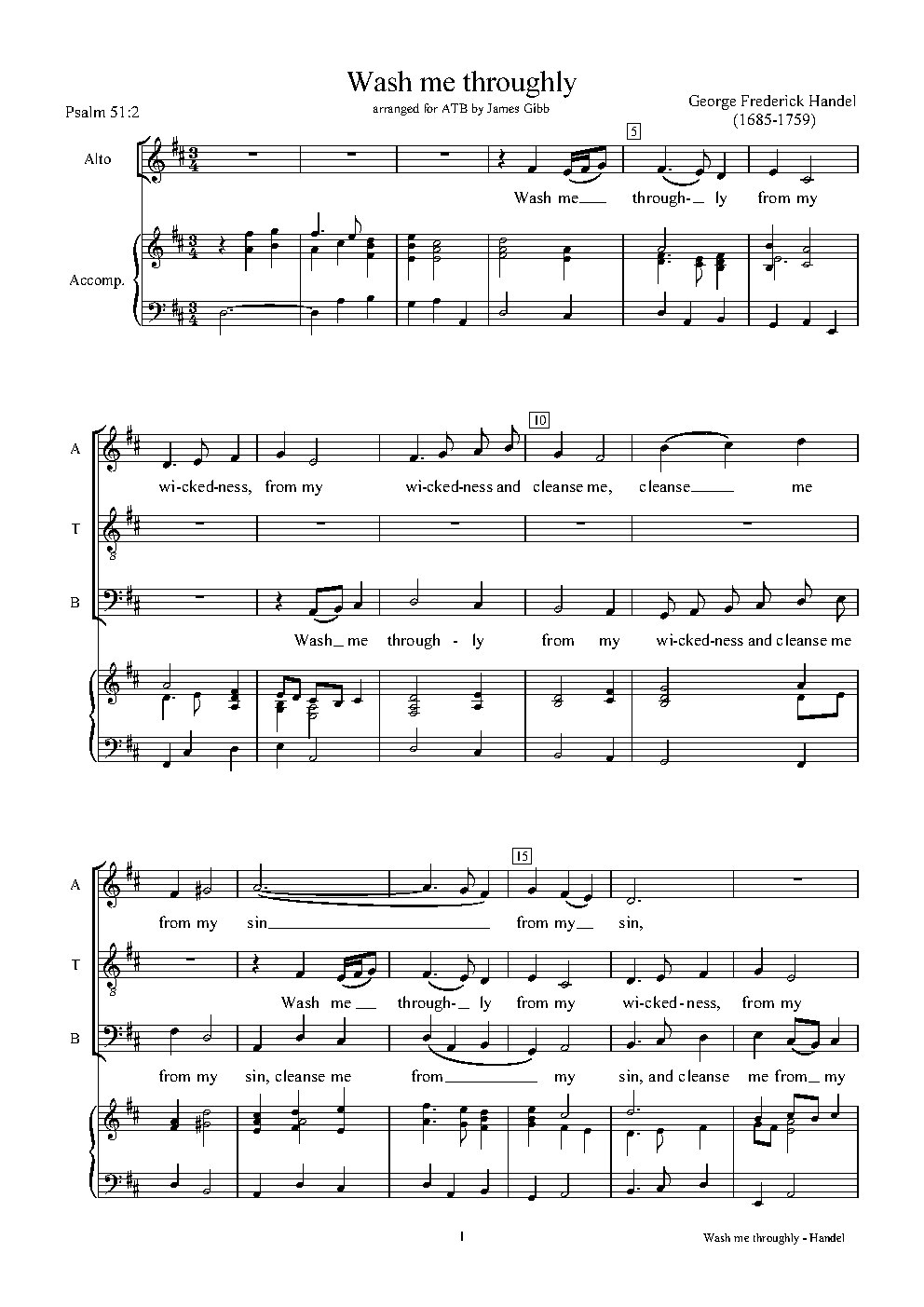
Have mercy upon me, HWV 248
Staff Notation • Sacred, Anthems
Preview
0
0
2 editions of this piece
Different typesettings and voicings of the same work. This page shows the main edition; the others are below.
ST,ATB · Paul R. Marchesano
Preview
Subscribed as
Want Sunday picks sent to another address too?
Free weekly email
Your choir should not be left out in what's trending
Sunday mass selections, psalms, and trending songs in your area — straight to your inbox.
Have mercy upon me, HWV 248 by George Fredrick Handel — Lyrics
In finem. Psalmus David,
cum venit ad eum Nathan propheta, quando intravit ad Bethsabee.
Miserere mei, Deus, secundum magnam misericordiam tuam; et secundum multitudinem miserationum tuarum, dele iniquitatem meam.
Amplius lava me ab iniquitate mea: et a peccato meo munda me.
Quoniam iniquitatem meam ego cognosco, et peccatum meum contra me est semper.
Tibi soli peccavi, et malum coram te feci; ut justificeris in sermonibus tuis, et vincas cum judicaris.
Ecce enim in iniquitatibus conceptus sum: et in peccatis concepit me mater mea.
Ecce enim veritatem dilexisti; incerta et occulta sapientiae tuae manifestasti mihi.
Asperges me hyssopo, et mundabor; lavabis me, et super nivem dealbabor.
Auditui meo dabis gaudium et laetitiam: et exsultabunt ossa humiliata.
Averte faciem tuam a peccatis meis, et omnes iniquitates meas dele.
Read full lyrics
About Have mercy upon me, HWV 248
This setting of Psalm 51 opens with a stark declamation for the bass soloist, soon joined by the choir. The text, a profound plea for forgiveness, is set with dramatic intensity. Handel skilfully contrasts moments of solo reflection with powerful choral interjections, building a compelling emotional arc. The interplay between the soloists and the full choir reflects the text’s personal confession and its universal implications. The Latin text, a psalm of David, explores themes of sin, repentance, and divine mercy, articulated through rich harmonic language and contrapuntal texture characteristic of Handel’s sacred choral writing.