This edition was prepared by Gerd Eichler — free to download, print, rehearse and perform.
Gott, dem alle Rach heimfällt, SWV 192
Staff Notation • Sacred, Hymns
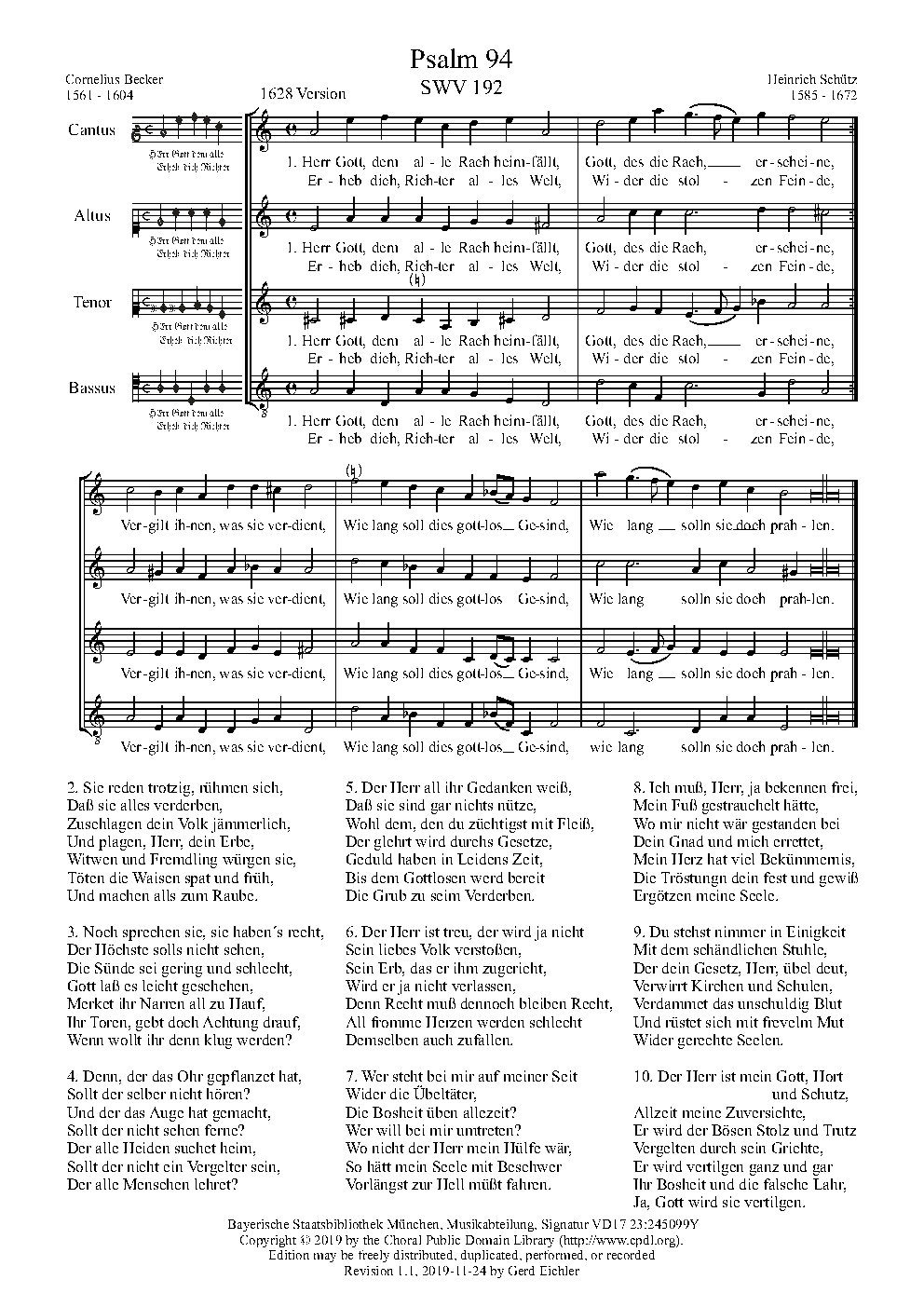
Preview
0
0
9 editions of this piece
Different typesettings and voicings of the same work. This page shows the main edition; the others are below.
Subscribed as
Want Sunday picks sent to another address too?
Free weekly email
Your choir should not be left out in what's trending
Sunday mass selections, psalms, and trending songs in your area — straight to your inbox.
Gott, dem alle Rach heimfällt, SWV 192 by Heinrich Schütz — Lyrics
Psalmus ipsi David, quarta sabbati. Deus ultionum Dominus; Deus ultionum libere egit.
Exaltare, qui judicas terram; redde retributionem superbis.
Usquequo peccatores, Domine, usquequo peccatores gloriabuntur;
effabuntur et loquentur iniquitatem; loquentur omnes qui operantur injustitiam?
Populum tuum, Domine, humiliaverunt, et haereditatem tuam vexaverunt.
Viduam et advenam interfecerunt, et pupillos occiderunt.
Et dixerunt: Non videbit Dominus, nec intelliget Deus Jacob.
Intelligite, insipientes in populo; et stulti, aliquando sapite.
Qui plantavit aurem non audiet? aut qui finxit oculum non considerat?
Qui corripit gentes non arguet, qui docet hominem scientiam?
Dominus scit cogitationes hominum, quoniam vanae sunt.
Beatus homo quem tu erudieris, Domine, et de lege tua docueris eum:
ut mitiges ei a diebus malis, donec fodiatur peccatori fovea.
Read full lyrics
About Gott, dem alle Rach heimfällt, SWV 192
Schütz's Gott, dem alle Rach heimfällt, SWV 192, is a powerful setting of Psalm 94. Opening with stark, imitative textures, the music vividly depicts the text's dramatic pronouncements. The composer masterfully contrasts moments of forceful declamation with passages of profound sorrow and lament, all conveyed through the SATB choir. The text, presented in both Latin and German, begins with God's vengeance and judgment upon the proud, before moving to the lament of the oppressed and the ultimate assertion of divine knowledge and power over human actions. This motet offers a profound theological and emotional journey, suitable for liturgical settings or concert performance.