This edition was prepared by Gerd Eichler — free to download, print, rehearse and perform.
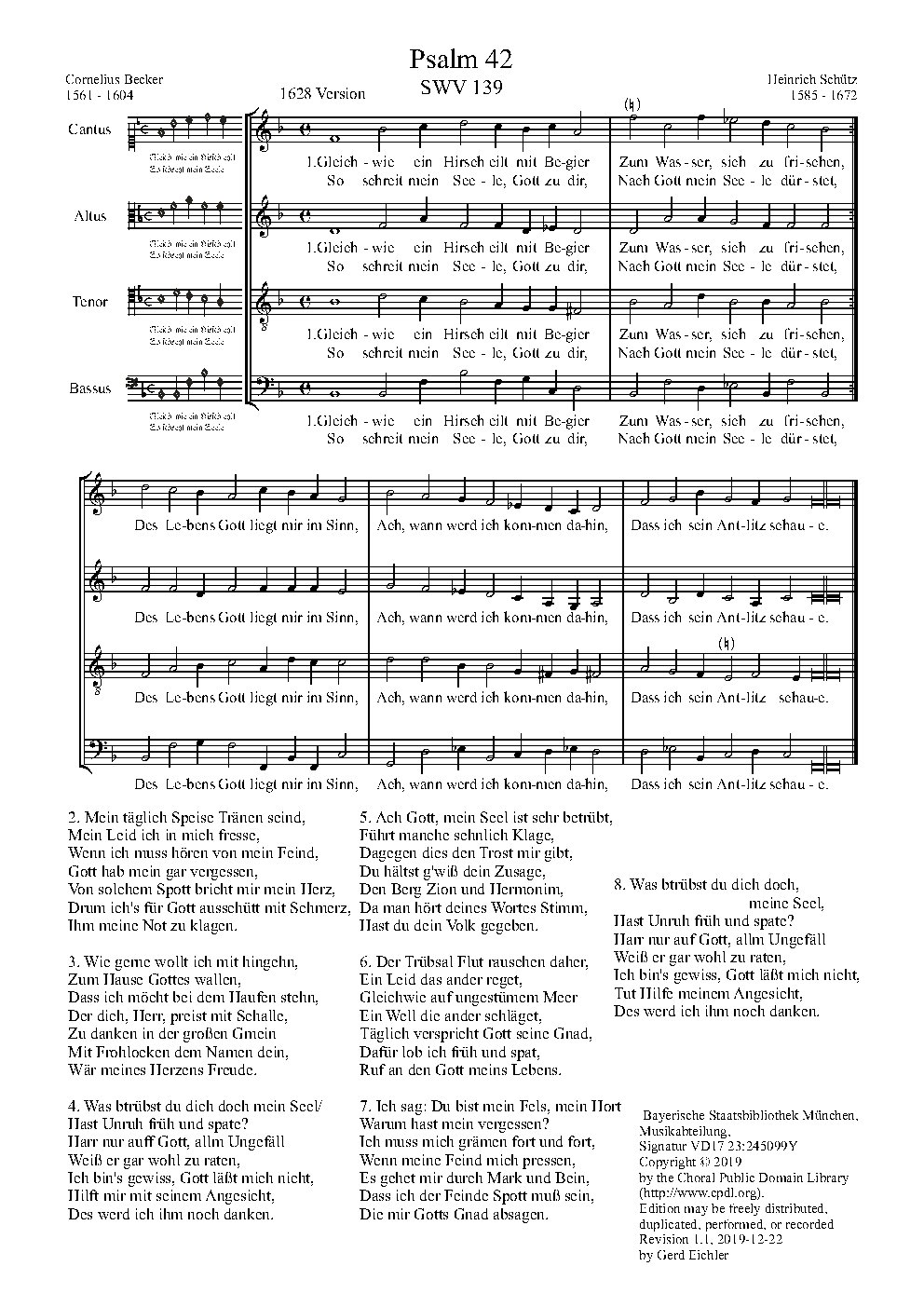
Gleich wie ein Hirsch eilt mit Begier, SWV 139
Staff Notation • Sacred, Hymns
Preview
0
0
5 editions of this piece
Different typesettings and voicings of the same work. This page shows the main edition; the others are below.
Subscribed as
Want Sunday picks sent to another address too?
Free weekly email
Your choir should not be left out in what's trending
Sunday mass selections, psalms, and trending songs in your area — straight to your inbox.
Gleich wie ein Hirsch eilt mit Begier, SWV 139 by Heinrich Schütz — Lyrics
In finem. Intellectus filiis Core.
Quemadmodum desiderat cervus ad fontes aquarum, ita desiderat anima mea ad te, Deus.
Sitivit anima mea ad Deum fortem, vivum; quando veniam et apparebo ante faciem Dei?
Fuerunt mihi lacrimae meae panis die ac nocte, dum dicitur mihi quotidie: Ubi est Deus tuus?
Haec recordatus sum, et effudi in me animam meam, quoniam transibo in locum tabernaculi admirabilis, usque ad domum Dei, in voce exsultationis et confessionis sonus epulantis.
Quare tristis es, anima mea? et quare conturbas me? Spera in Deo, quoniam adhuc confitebor illi, salutare vultus mei,
Read full lyrics
About Gleich wie ein Hirsch eilt mit Begier, SWV 139
Heinrich Schütz sets Psalm 42 (beginning with the words 'Gleich wie ein Hirsch eilt mit Begier' in German, but drawing on the Latin text of the Vulgate) for SATB voices. This sacred motet unfolds with a rich contrapuntal texture, a hallmark of Schütz's compositional style. The music vividly depicts the soul's intense longing for God, comparing it to a deer thirsting for water. As the text moves from distress and questioning ('Where is thy God?') to hope and affirmation ('I will yet give thanks unto him'), the musical lines ebb and flow, creating moments of both profound sorrow and fervent exultation. It is a powerful exploration of faith and spiritual yearning.