This edition was prepared by Allen Garvin — free to download, print, rehearse and perform.
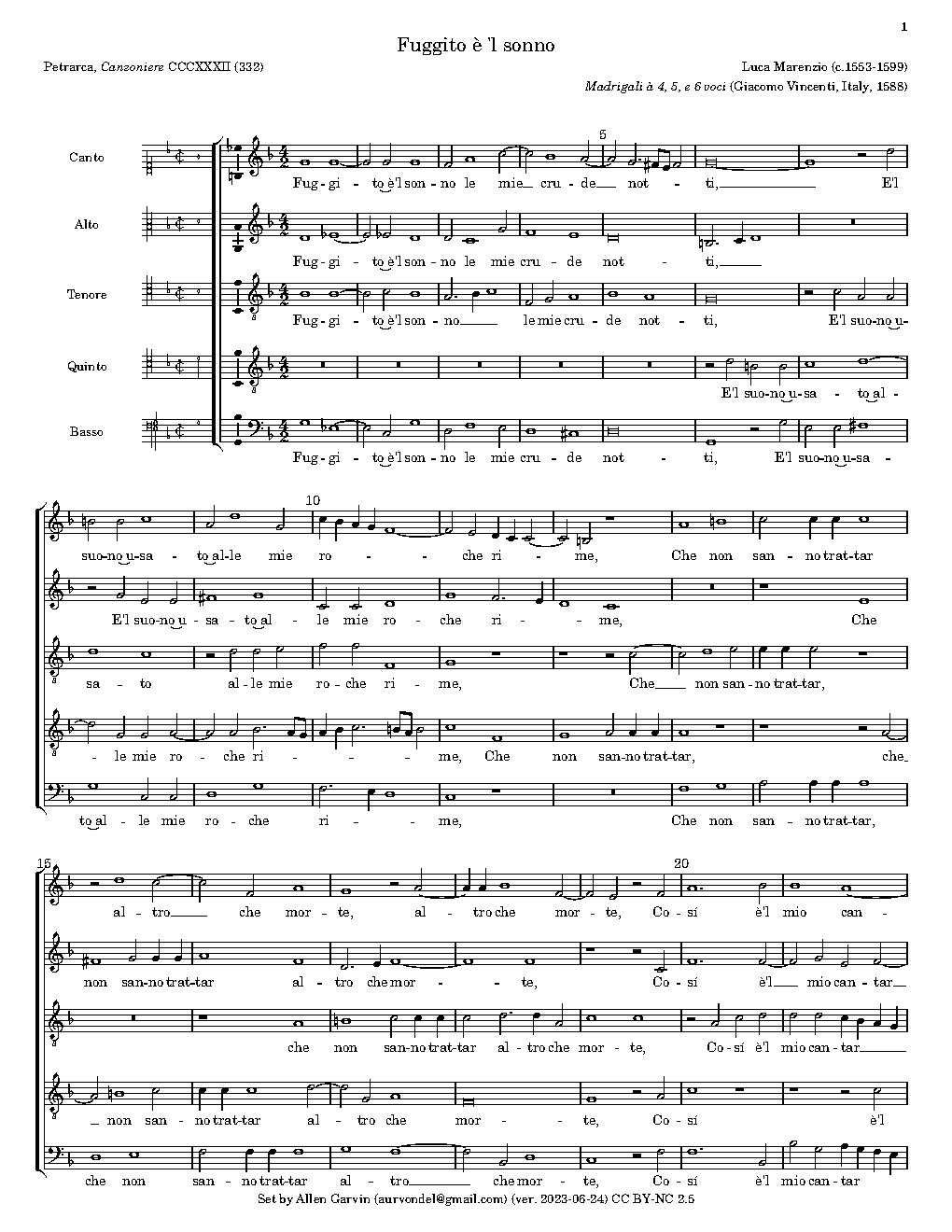
Fuggito è'l sonno
Staff Notation • Secular, Madrigals
Preview
0
0
2 editions of this piece
Different typesettings and voicings of the same work. This page shows the main edition; the others are below.
SATTB · Willem Verkaik
Preview
Subscribed as
Want Sunday picks sent to another address too?
Free weekly email
Your choir should not be left out in what's trending
Sunday mass selections, psalms, and trending songs in your area — straight to your inbox.
Fuggito è'l sonno by Luca Marenzio — Lyrics
Mia benigna fortuna e 'l viver lieto,
i chiari giorni et le tranquille notti
e i soavi sospiri e 'l dolce stile
che solea resonare in versi e 'n rime,
vòlti subitamente in doglia e 'n pianto,
odiar vita mi fanno, et bramar morte.
Crudel, acerba, inexorabil Morte,
cagion mi dài di mai non esser lieto,
ma di menar tutta mia vita in pianto,
e i giorni oscuri et le dogliose notti.
I mei gravi sospir' non vanno in rime,
e 'l mio duro martir vince ogni stile.
Ove è condutto il mio amoroso stile?
A parlar d'ira, a ragionar di morte.
U' sono i versi, u' son giunte le rime,
che gentil cor udia pensoso et lieto;
ove 'l favoleggiar d'amor le notti?
Or non parl'io, né penso, altro che pianto.
Già mi fu col desir sí dolce il pianto,
che condia di dolcezza ogni agro stile,
et vegghiar mi facea tutte le notti:
Read full lyrics
About Fuggito è'l sonno
Luca Marenzio's secular SATTB madrigal Fuggito è'l sonno opens with a sense of disquiet, its texture immediate and expressive of the text's profound sorrow. The initial music mirrors the sudden reversal of fortune described in the lyrics, where happy days and tranquil nights are overturned by grief and tears. The composer skillfully uses the five voices to depict the singer's despair, the initial sweetness of his style now replaced by laments and the harsh reality of his suffering. The music wrestles with the singer's anguish, the interplay of voices capturing the internal conflict between past joys and present misery. This Italian text, a poignant exploration of heartbreak and the longing for death, finds its emotional weight reflected in Marenzio's masterful madrigal writing.