This edition was prepared by Pothárn Imre — free to download, print, rehearse and perform.
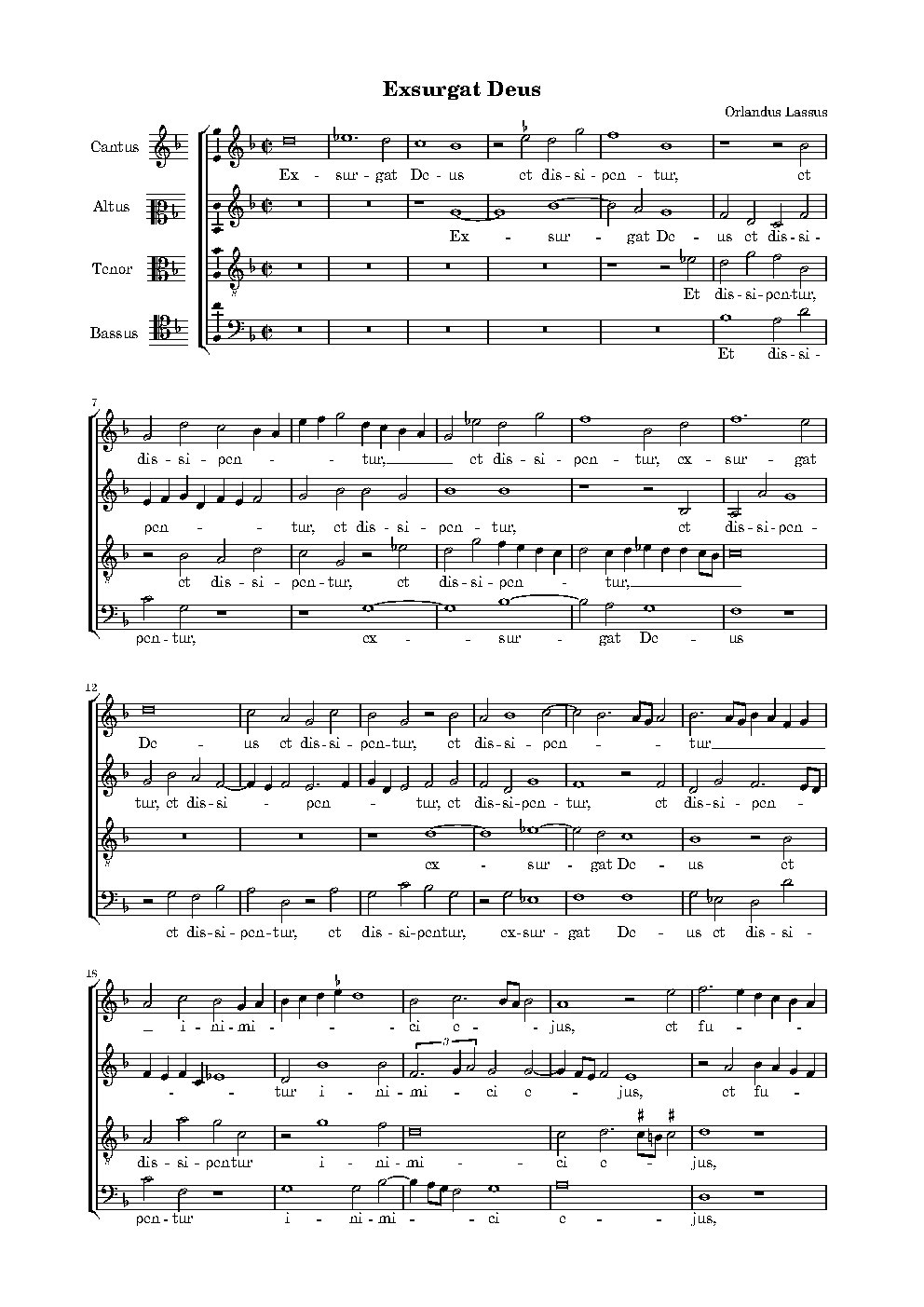
Exsurgat Deus a 4
Staff Notation • Sacred, Motets
Preview
0
0
2 editions of this piece
Different typesettings and voicings of the same work. This page shows the main edition; the others are below.
SATB · Pothárn Imre
Preview
Subscribed as
Want Sunday picks sent to another address too?
Free weekly email
Your choir should not be left out in what's trending
Sunday mass selections, psalms, and trending songs in your area — straight to your inbox.
Exsurgat Deus a 4 by Orlando di Lasso — Lyrics
In finem. Psalmus cantici ipsi David.
Exsurgat Deus, et dissipentur inimici ejus;
et fugiant qui oderunt eum a facie ejus.
Sicut deficit fumus, deficiant;
sicut fluit cera a facie ignis, sic pereant peccatores a facie Dei.
Et justi epulentur,
et exsultent in conspectu Dei,
et delectentur in laetitia.
Cantate Deo; psalmum dicite nomini ejus:
iter facite ei qui ascendit super occasum.
Dominus nomen illi; exsultate in conspectu ejus.
Turbabuntur a facie ejus,
patris orphanorum, et judicis viduarum;
Deus in loco sancto suo.
Deus qui inhabitare facit unius moris in domo;
qui educit vinctos in fortitudine,
similiter eos qui exasperant, qui habitant in sepulchris.
Deus, cum egredereris in conspectu populi tui,
cum pertransires in deserto,
terra mota est, etenim caeli distillaverunt,
a facie Dei Sinai, a facie Dei Israël.
Pluviam voluntariam segregabis, Deus, haereditati tuae;
et infirmata est, tu vero perfecisti eam.
Animalia tua habitabunt in ea;
Read full lyrics
About Exsurgat Deus a 4
Orlando di Lasso, one of the most prolific and influential composers of the 16th century, created this setting of Psalm 68:1-10. This motet for four-part choir (SATB) is written in Latin and draws upon the powerful text of the psalms. The music sets the verses that call for God to arise and scatter his enemies, contrasting the ultimate destruction of the wicked with the rejoicing of the righteous. It speaks of God as a protector of the vulnerable, leading captives to freedom. Lasso's masterful setting, typical of his sacred output, brings a rich polyphonic texture to this dramatic and devotional text, making it a significant work within the Renaissance motet tradition.