This edition was prepared by James R. Jennings — free to download, print, rehearse and perform.
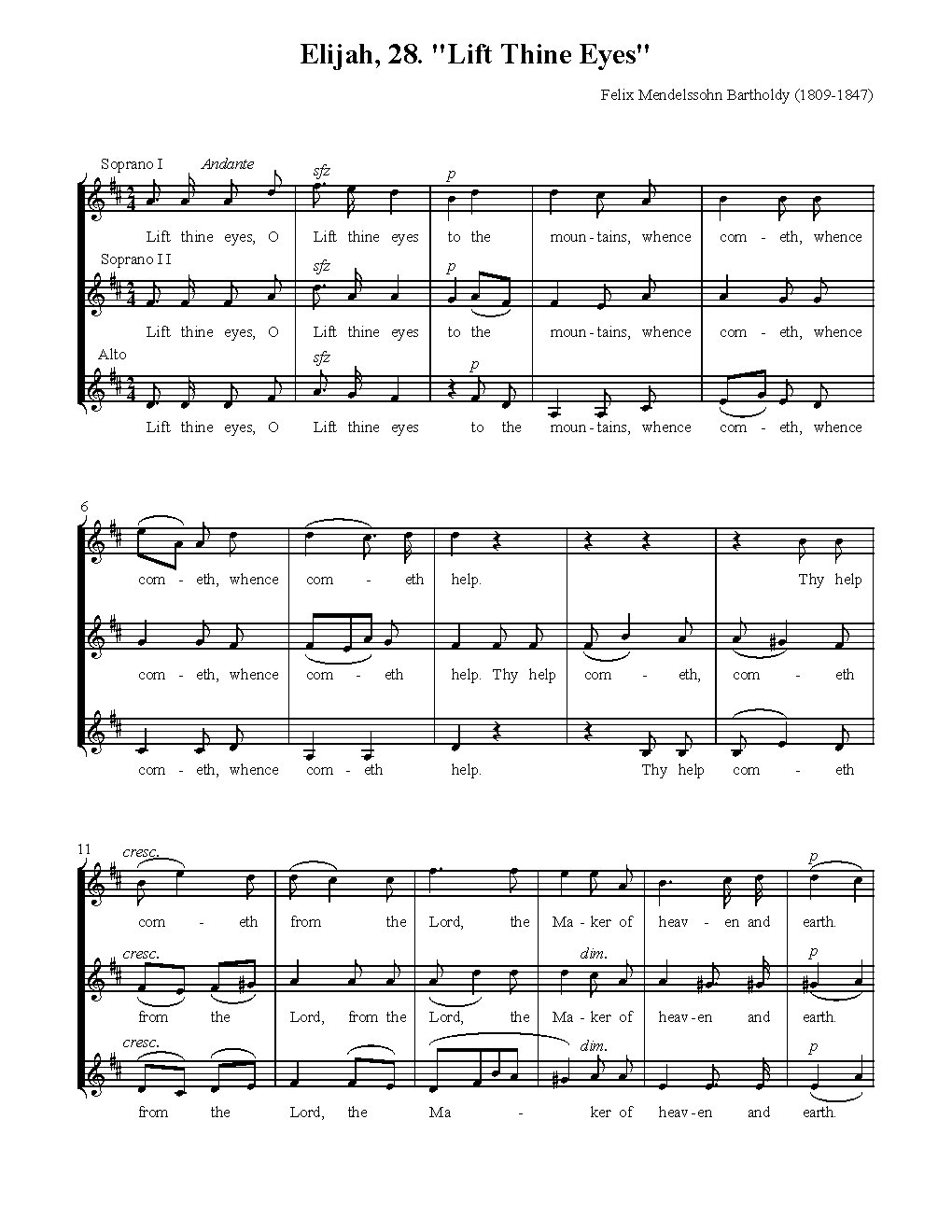
Elias 28 Lift thine eyes / Hebe deine Augen
Staff Notation • Sacred, Oratorios
Preview
0
0
4 editions of this piece
Different typesettings and voicings of the same work. This page shows the main edition; the others are below.
Subscribed as
Want Sunday picks sent to another address too?
Free weekly email
Your choir should not be left out in what's trending
Sunday mass selections, psalms, and trending songs in your area — straight to your inbox.
Elias 28 Lift thine eyes / Hebe deine Augen by Felix Mendelssohn — Lyrics
Introduction
Elijah
As God the Lord of Israel liveth, before whom I stand: There shall not be dew nor rain these years, but according to my word.
Overture
Part one
1.
The People
Help, Lord! Wilt Thou quite destroy us? The harvest now is over, the summer days are gone, and yet no power cometh to help us! Will then the Lord be no more God in Zion? The deeps afford no water, and the rivers are exhausted. The suckling’s tongue now cleaveth for thirst to his mouth. The infant children ask for bread, and there is no one breaketh it to feed them
2.
The People
Lord, bow Thine ear to our prayer . . .
Two Women
Zion spreadeth her hands for aid, and there is neither help nor comfort.
3.
Obadiah
Ye people, rend your hearts and not your garments. For your transgressions, the prophet Elijah hath sealed the heavens through the word of God. I therefore say to ye: forsake your idols, return to God; for He is slow to anger, and merciful, and kind, and gracious, and repenteth Him of the evil.
4.
Read full lyrics
About Elias 28 Lift thine eyes / Hebe deine Augen
Felix Mendelssohn’s oratorio Elijah is a monumental work of the nineteenth century, drawing its text from the Old Testament. This extract, Lift thine eyes, is set for SSA choir and features the composer’s characteristic lyrical gift. The English text, derived from the Book of Kings, speaks of drought and desperation, with the people crying out for divine intervention. The German title, Hebe deine Augen, translates to 'Lift thine eyes', suggesting a plea for hope amidst the hardship. Mendelssohn’s setting captures the profound emotional weight of the text, offering moments of both solemnity and soaring beauty for the treble voices.