This edition was prepared by Pothárn Imre — free to download, print, rehearse and perform.
Deus, Deus meus
Staff Notation • Sacred, Motets
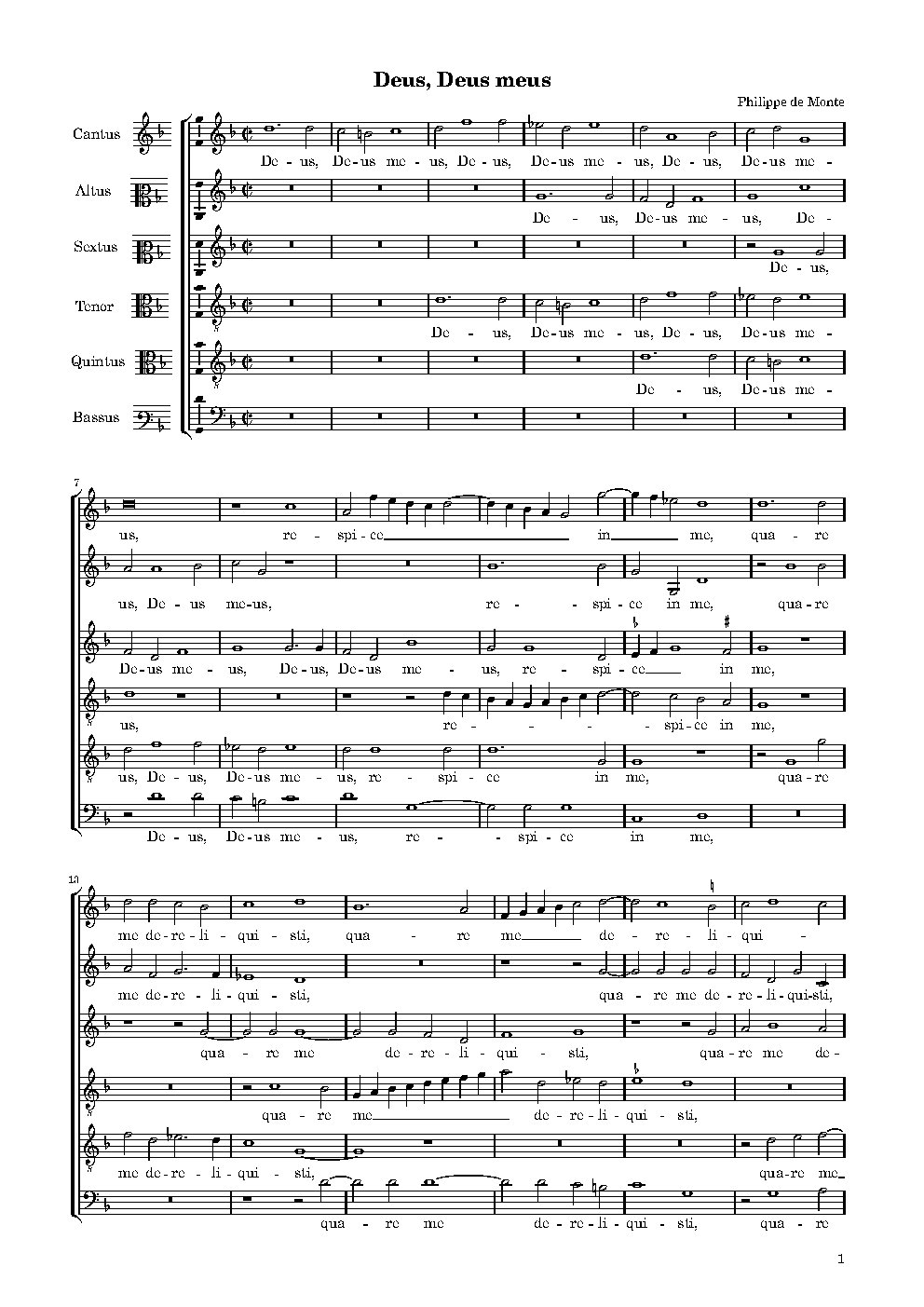
Preview
0
0
5 editions of this piece
Different typesettings and voicings of the same work. This page shows the main edition; the others are below.
Subscribed as
Want Sunday picks sent to another address too?
Free weekly email
Your choir should not be left out in what's trending
Sunday mass selections, psalms, and trending songs in your area — straight to your inbox.
Deus, Deus meus by Philippe de Monte — Lyrics
In finem, pro susceptione matutina. Psalmus David.
Deus, Deus meus, respice in me: quare me dereliquisti? longe a salute mea verba delictorum meorum.
Deus meus, clamabo per diem, et non exaudies; et nocte, et non ad insipientiam mihi.
Tu autem in sancto habitas, laus Israël.
In te speraverunt patres nostri; speraverunt, et liberasti eos.
Ad te clamaverunt, et salvi facti sunt; in te speraverunt, et non sunt confusi.
Ego autem sum vermis, et non homo; opprobrium hominum, et abjectio plebis.
Omnes videntes me deriserunt me; locuti sunt labiis, et moverunt caput.
Speravit in Domino, eripiat eum: salvum faciat eum, quoniam vult eum.
Quoniam tu es qui extraxisti me de ventre, spes mea ab uberibus matris meae.
In te projectus sum ex utero; de ventre matris meae Deus meus es tu:
ne discesseris a me, quoniam tribulatio proxima est, quoniam non est qui adjuvet.
Circumdederunt me vituli multi; tauri pingues obsederunt me.
Aperuerunt super me os suum, sicut leo rapiens et rugiens.
Sicut aqua effusus sum, et dispersa sunt omnia ossa mea: factum est cor meum tamquam cera liquescens in medio ventris mei.
Aruit tamquam testa virtus mea, et lingua mea adhaesit faucibus meis: et in pulverem mortis deduxisti me.
Read full lyrics
About Deus, Deus meus
Philippe de Monte's motet Deus, Deus meus is a profound setting of Psalm 21. The text expresses deep lament and a sense of abandonment, directly addressing God with pleas for help and recounting past deliverances. The composer crafts this emotional journey for a large choir of six voices (SAATTB), allowing for rich polyphonic textures and dramatic contrasts. The music would likely reflect the text's pathos, moving from expressions of personal suffering to affirmations of faith and trust in divine salvation. This sacred motet offers a powerful vehicle for exploring themes of tribulation and hope through a skilled Renaissance composer's vocal writing.