This edition was prepared by Sabine Cassola — free to download, print, rehearse and perform.
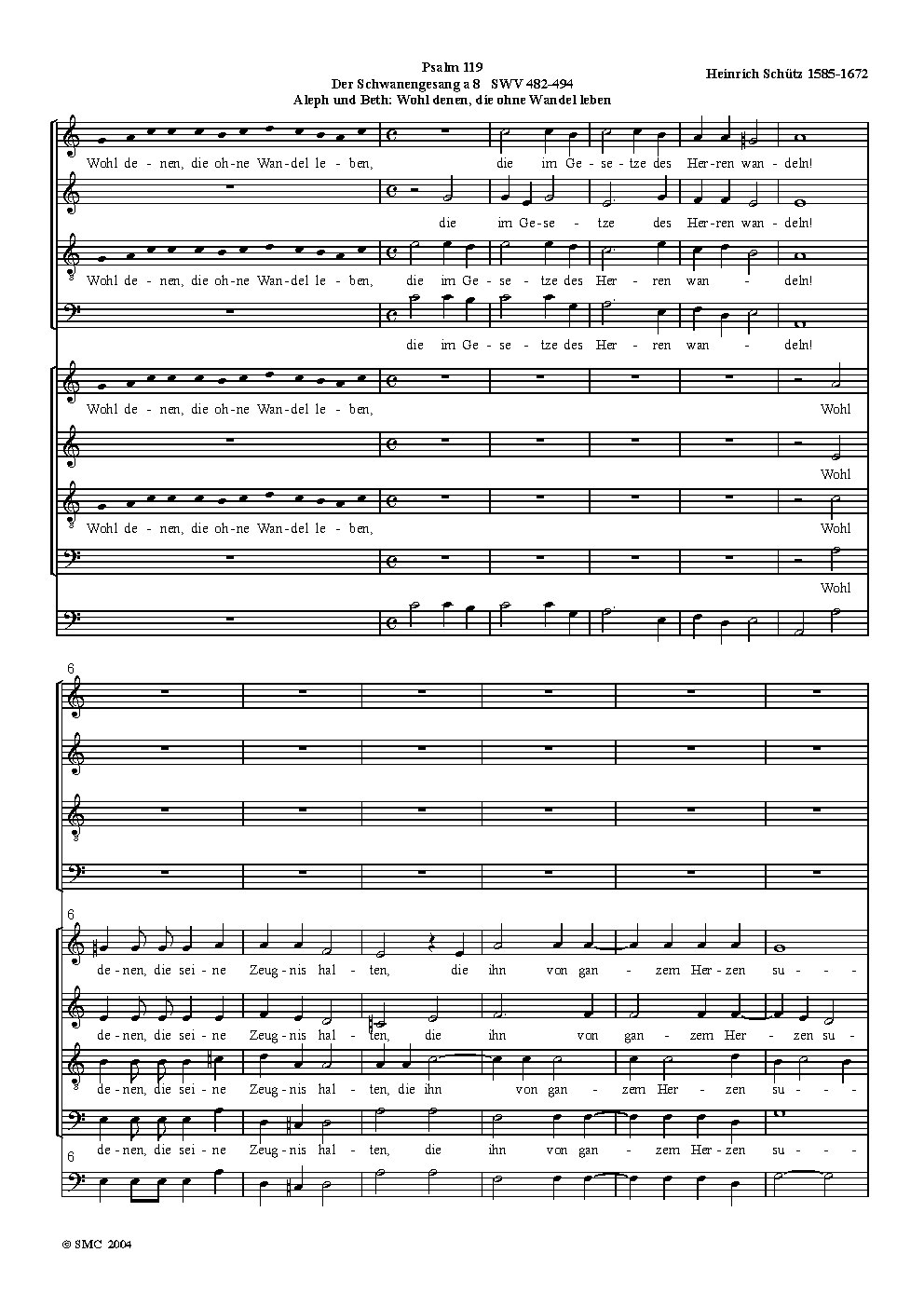
Der Schwanengesang a 8 (Aleph und Beth: Woohl denen, die Ohne Wandel leben)
Staff Notation • Sacred, Motets
Preview
0
0
Subscribed as
Want Sunday picks sent to another address too?
Free weekly email
Your choir should not be left out in what's trending
Sunday mass selections, psalms, and trending songs in your area — straight to your inbox.
Der Schwanengesang a 8 (Aleph und Beth: Woohl denen, die Ohne Wandel leben) by Heinrich Schütz — Lyrics
Alleluja. Aleph. Beati immaculati in via, qui ambulant in lege Domini.
Beati qui scrutantur testimonia ejus; in toto corde exquirunt eum.
Non enim qui operantur iniquitatem in viis ejus ambulaverunt.
Tu mandasti mandata tua custodiri nimis.
Utinam dirigantur viae meae ad custodiendas justificationes tuas.
Tunc non confundar, cum perspexero in omnibus mandatis tuis.
Confitebor tibi in directione cordis, in eo quod didici judicia
justitiae tuae.
Justificationes tuas custodiam; non me derelinquas usquequaque.
Beth. In quo corrigit adolescentior viam suam? in custodiendo sermones tuos.
In toto corde meo exquisivi te; ne repellas me a mandatis tuis.
In corde meo abscondi eloquia tua, ut non peccem tibi.
Benedictus es, Domine; doce me justificationes tuas.
In labiis meis pronuntiavi omnia judicia oris tui.
In via testimoniorum tuorum delectatus sum, sicut in omnibus divitiis.
In mandatis tuis exercebor, et considerabo vias tuas.
In justificationibus tuis meditabor: non obliviscar sermones tuos.
Ghimel. Retribue servo tuo, vivifica me, et custodiam sermones tuos.
Revela oculos meos, et considerabo mirabilia de lege tua.
Incola ego sum in terra: non abscondas a me mandata tua.
Concupivit anima mea desiderare justificationes tuas in omni tempore.
Increpasti superbos; maledicti qui declinant a mandatis tuis.
Read full lyrics
About Der Schwanengesang a 8 (Aleph und Beth: Woohl denen, die Ohne Wandel leben)
Heinrich Schütz, a pivotal figure in German Baroque music, composed this motet for double choir (SATB.SATB). The work sets a text drawn from Psalm 119, divided into two sections, Aleph and Beth, reflecting the acrostic structure of the original Hebrew. The Latin verses explore the blessedness of those who live blamelessly and seek God with their whole heart, praying for guidance to keep His statutes. The second section, in German, continues this theme, asking how a young person may keep their way pure, and seeking God diligently. Schütz’s masterful use of the eight voices creates a rich and profound musical setting of these devotional texts.