Cherub And Seraphim
Solfa Notation • Concert, Classicals, Anthems
Subscribed as
Want Sunday picks sent to another address too?
Your choir should not be left out in what's trending
Sunday mass selections, psalms, and trending songs in your area — straight to your inbox.
About Cherub And Seraphim
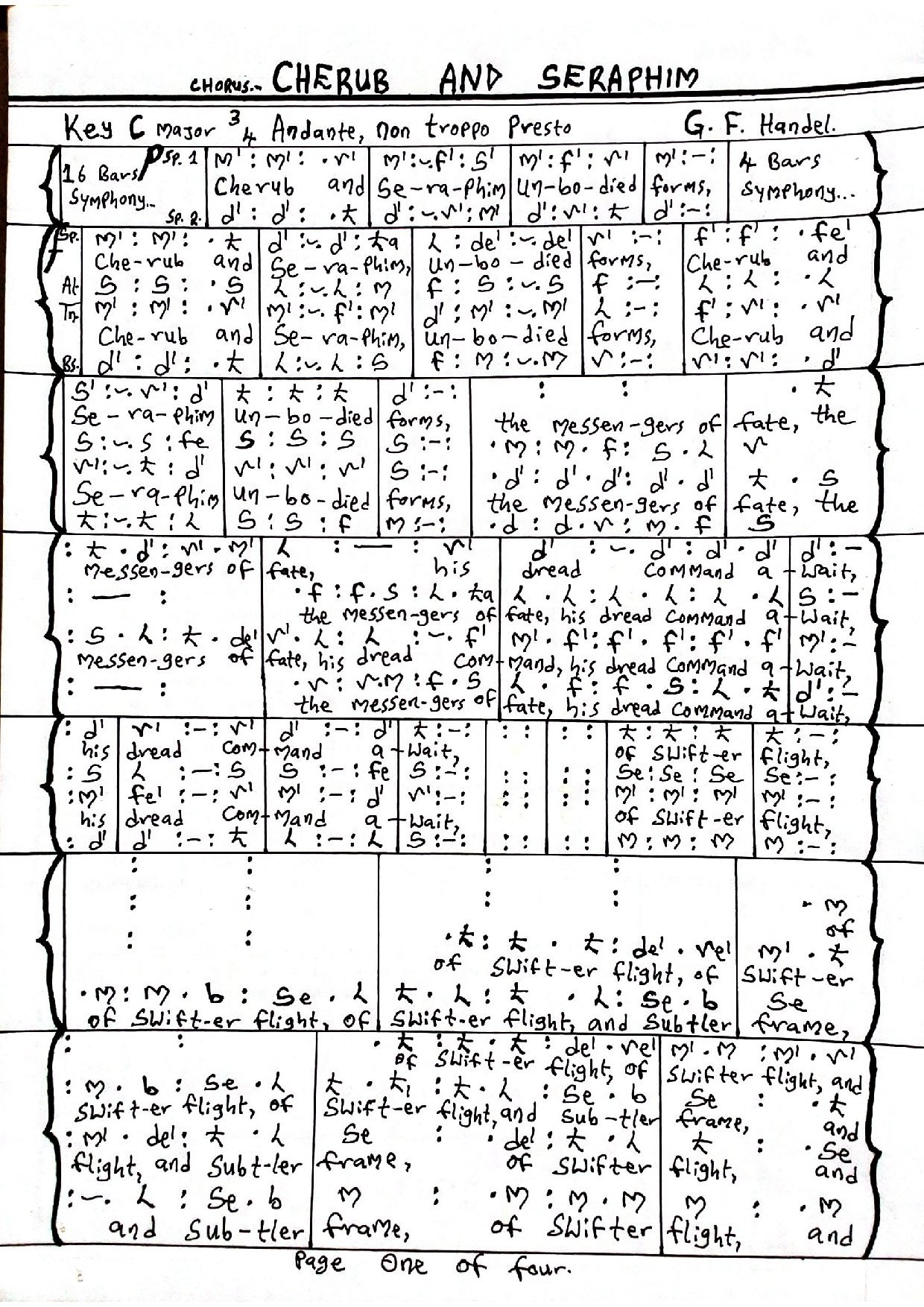
When a choir wants to stretch its vocal muscles and tackle something truly grand, classical oratorio choruses like "Cherub and Seraphim" are a favorite choice. Originally from G.F. Handel’s final oratorio, Jephtha, this piece has found a firm place in the repertoire of ambitious Nigerian choirs. We often bring it out for special choral concerts, classical music festivals, or major church celebrations where a majestic, complex anthem is needed to lift the atmosphere.
The text paints a vivid, awe-inspiring picture of the heavenly host. It describes the angels as "unbodied forms" and "messengers of fate" who wait on God's command. The music shifts dramatically when it reaches the Allegro section, illustrating how these celestial beings "ride on whirlwinds, directing the storms." For the singers, this means navigating fast, intricate runs and overlapping fugal entries that mimic the swirling winds and tempests.
Mastering this chorus takes serious rehearsal, especially to keep the fast-moving solfa notes crisp and the diction clear across all four parts. When the soprano line soars above the driving rhythm of the lower voices, it creates a thrilling wall of sound. It is a demanding piece, but the sheer energy of singing Handel’s stormy, triumphant chords makes all the hard work in the choir loft completely worth it.