This edition was prepared by John Craick — free to download, print, rehearse and perform.
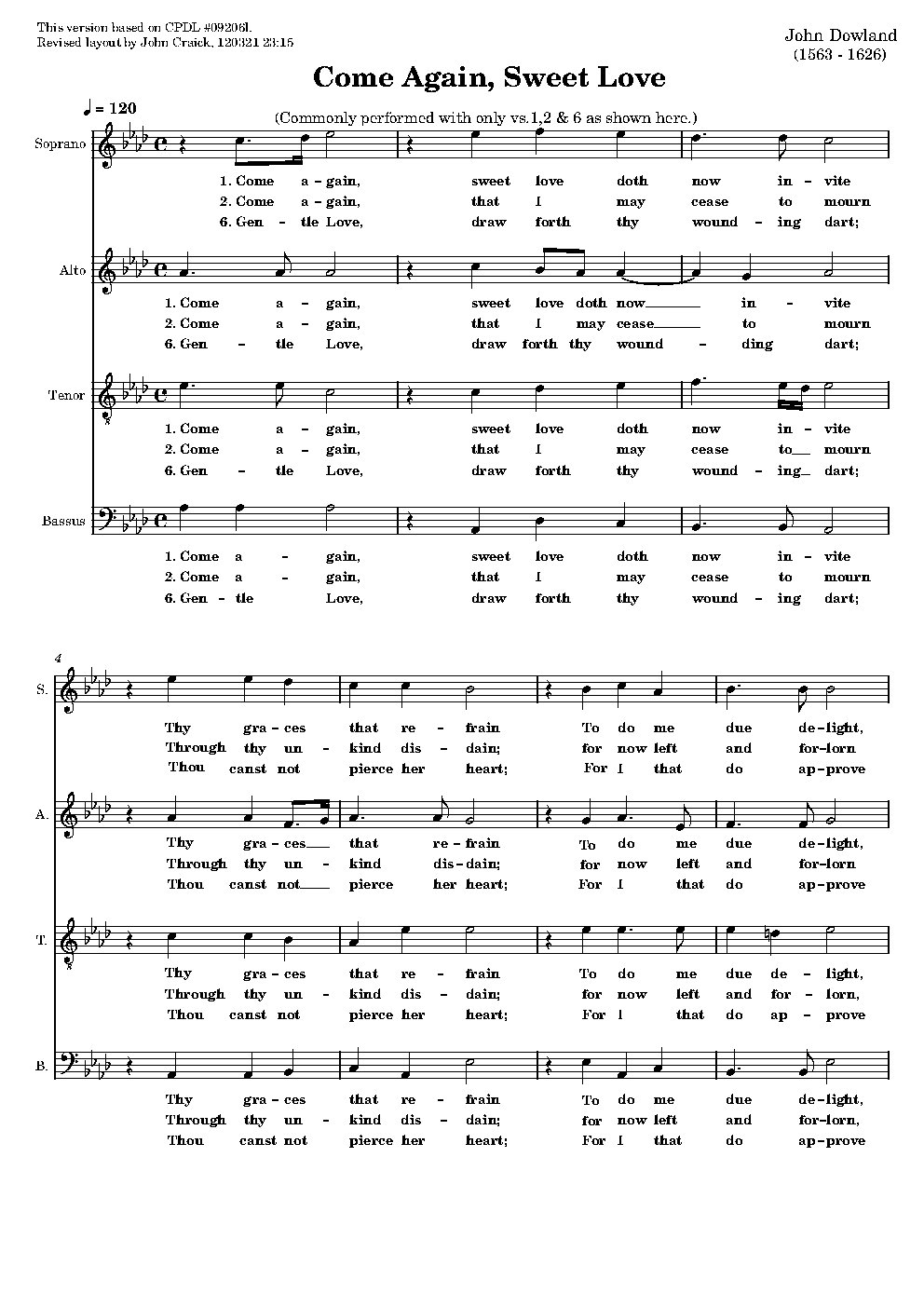
Come again! Sweet love doth now invite
Staff Notation • Secular, Lute songs
Preview
0
0
10 editions of this piece
Different typesettings and voicings of the same work. This page shows the main edition; the others are below.
SATB, SSAA · John Craick
Preview
SATB, SSAA · Andrew Sims
Preview
SATB, SSAA · Bernardo Bernal
Preview
SATB, SSAA · Stefan Schwarz
Preview
SATB, SSAA · Philip Legge
Preview
SATB, SSAA · Brian Russell
Preview
SATB, SSAA · Suzi Nassen Stefl
Preview
SATB, SSAA · Bettina Blokland
Preview
SATB, SSAA · Rafael Ornes
Preview
Subscribed as
Want Sunday picks sent to another address too?
Free weekly email
Your choir should not be left out in what's trending
Sunday mass selections, psalms, and trending songs in your area — straight to your inbox.
Come again! Sweet love doth now invite by John Dowland — Lyrics
1. Come again! sweet love doth now invite
Thy graces that refrain
To do me due delight,
To see, to hear, to touch, to kiss, to die,
With thee again in sweetest sympathy.
2. Come again! that I may cease to mourn
Through thy unkind disdain;
For now left and forlorn
I sit, I sigh, I weep, I faint, I die
In deadly pain and endless misery.
3. All the day the sun that lends me shine
By frowns doth cause me pine
And feeds me with delay;
Her smiles, my springs that makes my joy to grow,
Her frowns the winter of my woe.
Read full lyrics
About Come again! Sweet love doth now invite
John Dowland's Come again! Sweet love doth now invite is a classic example of the English lute song, presented here in a sophisticated arrangement for mixed voices (SATB) and also a version for female voices (SSAA). The text is a poignant expression of longing and despair, painting a vivid picture of unrequited love. The singer laments their sorrow and the pain of separation, contrasting the sun's apparent warmth with their own inner coldness and the darkness of their dreams. The music captures the intense emotions of the lyrics, from the initial plea for the return of a loved one to the depths of misery and sleepless nights. This piece offers a compelling opportunity for choirs to explore the rich expressive possibilities of Renaissance vocal polyphony and intimate textual settings.