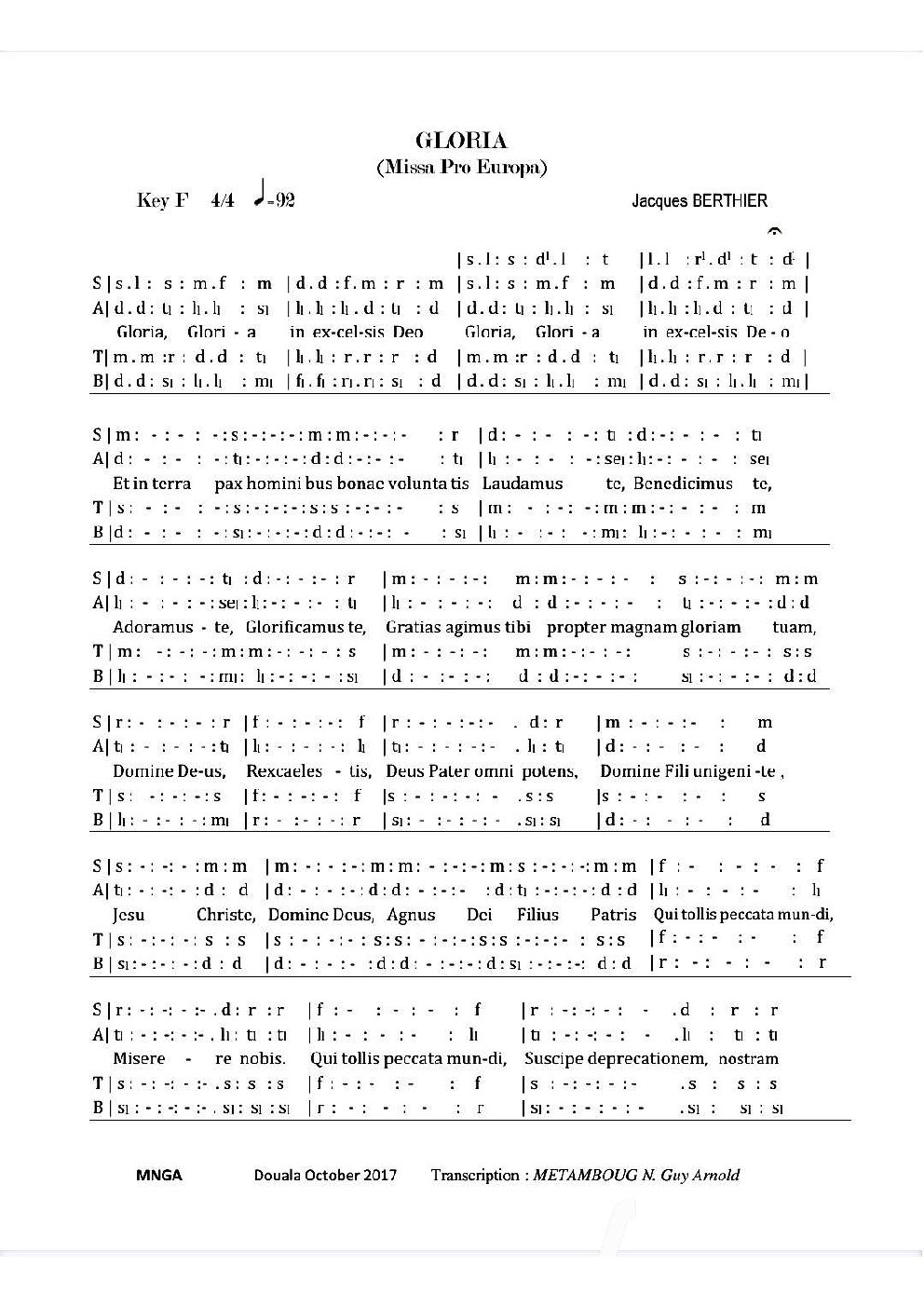
GLORIA (Missa Pro Europa)
Solfa Notation • Gloria, Latin Hymns, Mass Settings, Gospel Acclamation / Alleluia
Subscribed as
Want Sunday picks sent to another address too?
Your choir should not be left out in what's trending
Sunday mass selections, psalms, and trending songs in your area — straight to your inbox.
GLORIA (Missa Pro Europa) by Jacques BERTHIER — Lyrics
About GLORIA (Missa Pro Europa)
This setting of the "Gloria" comes from Jacques Berthier's *Missa Pro Europa*, bringing the meditative, chant-like style of the Taizé community into the heart of the Catholic Mass. Rather than a fast-paced or overly complex arrangement, this piece relies on steady, reverent four-part harmony that allows the ancient Latin text to speak clearly. It opens with the joyful angelic proclamation, "Gloria in excelsis Deo," before moving smoothly through the traditional prayers of praise, petition, and adoration.
Musically, the score is designed to be accessible yet deeply moving. The voices move together in a unified rhythm, making it easy for a choir to maintain a prayerful blend without losing the congregation. The steady progression through the text—from the humble "Qui tollis peccata mundi" to the triumphant final "Cum Sancto Spiritu" and "Amen!"—creates a natural arc of worship. Appended to the end of the sheet is Berthier's famous Taizé "Alleluia," often used as a joyful Gospel Acclamation to complement the Mass setting.
In Nigerian parishes, Latin settings like this are cherished for solemnities, feast days, and special liturgical celebrations. The straightforward solfa notation makes it easy for local choirs to learn and perfect the harmonies. When sung with a balanced, unhurried tempo, this Gloria brings a profound sense of universal tradition and majesty to the choir loft, elevating the entire congregation's worship.