This edition was prepared by Gerd Eichler — free to download, print, rehearse and perform.
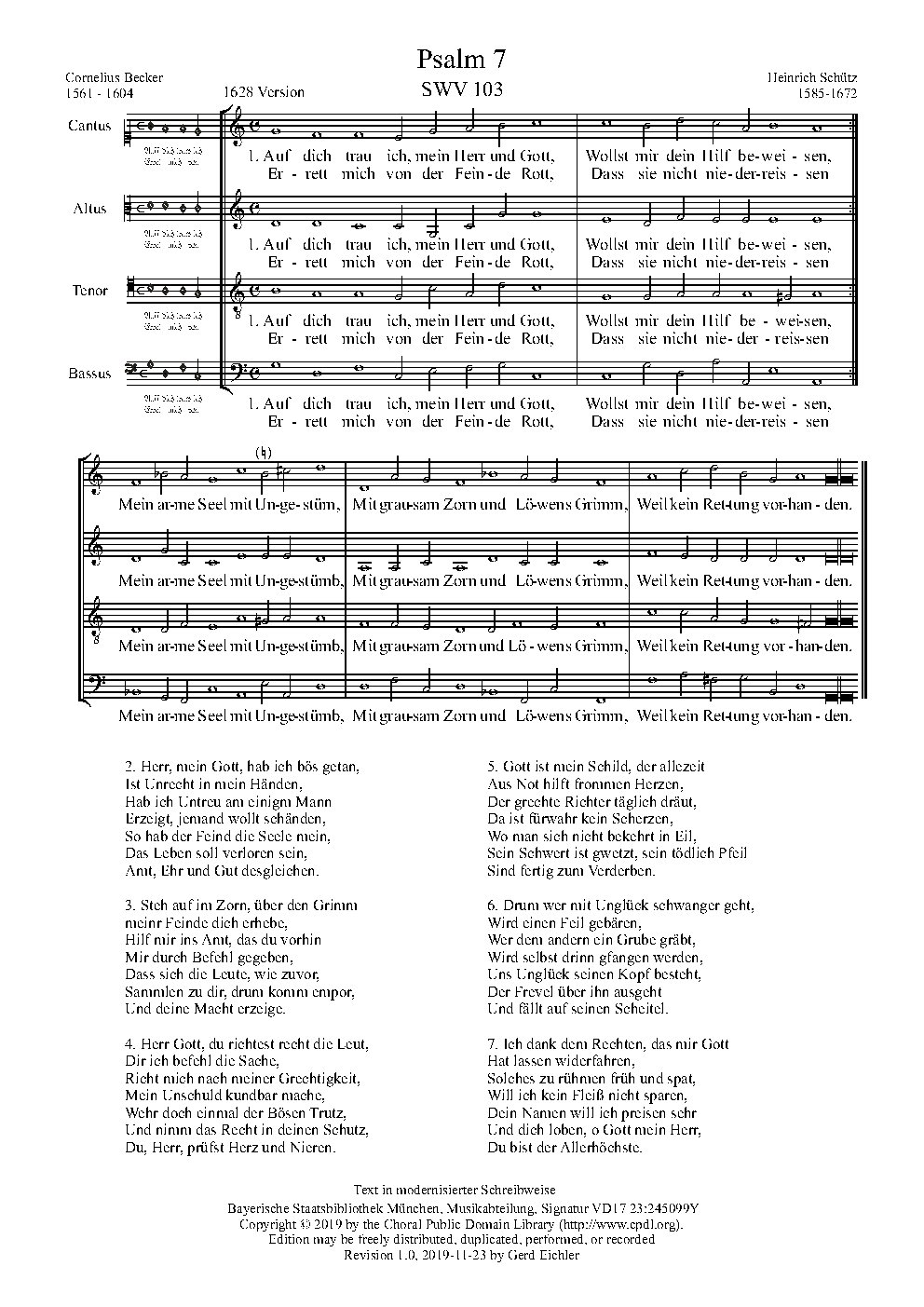
Auf dich trau ich, mein Herr und Gott, SWV 103
Staff Notation • Sacred, Hymns
Preview
0
0
5 editions of this piece
Different typesettings and voicings of the same work. This page shows the main edition; the others are below.
Subscribed as
Want Sunday picks sent to another address too?
Free weekly email
Your choir should not be left out in what's trending
Sunday mass selections, psalms, and trending songs in your area — straight to your inbox.
Auf dich trau ich, mein Herr und Gott, SWV 103 by Heinrich Schütz — Lyrics
Psalmus David, quem cantavit Domino pro verbis Chusi, filii Iemini.
Domine Deus meus, in te speravi; salvum me fac ex omnibus persequentibus me,
et libera me:
nequando rapiat ut leo animam meam, dum non est qui redimat, neque qui salvum faciat.
Domine Deus meus, si feci istud, si est iniquitas in manibus meis,
si reddidi retribuentibus mihi mala,
decidam merito ab inimicis meis inanis.
Persequatur inimicus animam meam, et comprehendat; et conculcet in terra vitam meam, et gloriam meam in pulverem deducat. [diapsalma]
Exsurge, Domine, in ira tua, et exaltare in finibus inimicorum meorum:
et exsurge, Domine Deus meus, in praecepto quod mandasti,
et synagoga populorum circumdabit te:
et propter hanc in altum regredere:
Dominus iudicat populos. Iudica me, Domine, secundum iustitiam meam,
Read full lyrics
About Auf dich trau ich, mein Herr und Gott, SWV 103
Heinrich Schütz was a pivotal figure in early German Baroque music. This setting of Psalm 7, Auf dich trau ich, mein Herr und Gott, is for SATB choir. The text is a plea for divine protection against enemies, expressing deep faith and trust in God. It begins with the composer's name and the tradition he represents. The music reflects the dramatic and emotional intensity of the Hebrew psalm text. The work is a powerful example of sacred music from the 17th century, suitable for liturgical or concert settings where a profound expression of faith is desired. Its setting of both Latin and German texts highlights the multilingual liturgical practices of the era.