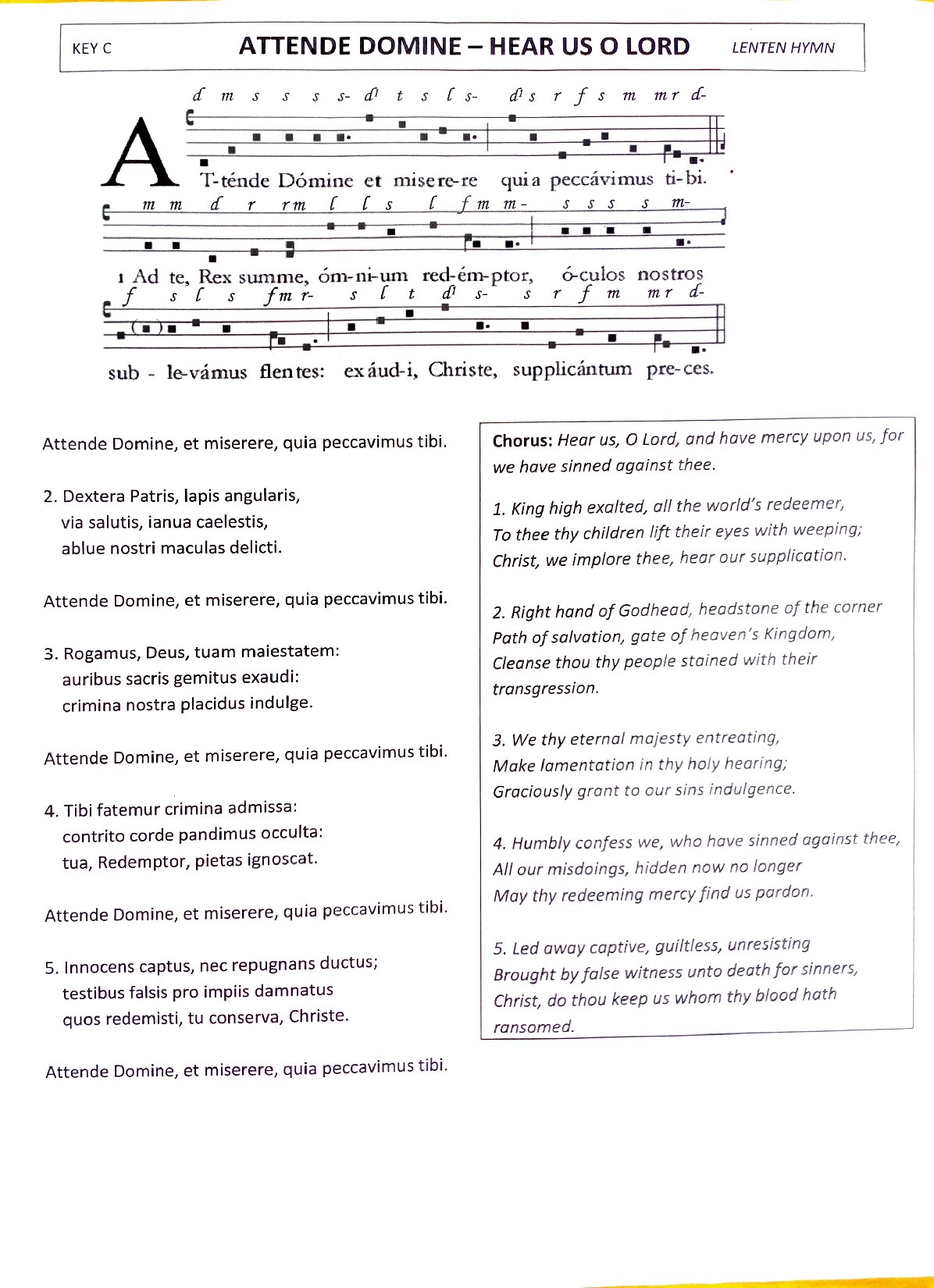
ATTENDE DOMINE – HEAR US O LORD
Staff & Solfa Notation • Latin Hymns, Lenten Hymns, Hymns
Subscribed as
Want Sunday picks sent to another address too?
Your choir should not be left out in what's trending
Sunday mass selections, psalms, and trending songs in your area — straight to your inbox.
ATTENDE DOMINE – HEAR US O LORD — Lyrics
About ATTENDE DOMINE – HEAR US O LORD
When the season of Lent arrives, the mood in the choir loft shifts. We put away the grand, soaring alleluias and turn to pieces that draw the congregation into quiet reflection. "Attende Domine" is one of those essential Lenten chants that immediately sets a tone of reverence and repentance. The title translates to "Hear us, O Lord," and the refrain carries a simple, profound plea: have mercy on us, for we have sinned against you.
The beauty of this chant lies in its stark simplicity. Sung in unison, the melody rises and falls like a natural breath, carrying the text without any unnecessary vocal display. We often bring this out during Ash Wednesday as the ashes are distributed, or use it as a meditative Communion hymn throughout the forty days of Lent. The verses walk through a humble confession of faults and a deep trust in Christ the Redeemer.
Even for congregations that do not speak Latin, the solemn cadence of "Attende Domine" communicates exactly what the words mean. It is a prayer of a people recognizing their need for grace. Rehearsing this piece is less about hitting difficult notes and more about singing with a unified, contrite spirit, letting the ancient words speak for themselves. The score also provides the English translation, allowing choirs to sing the verses in the vernacular while maintaining the traditional chant melody.