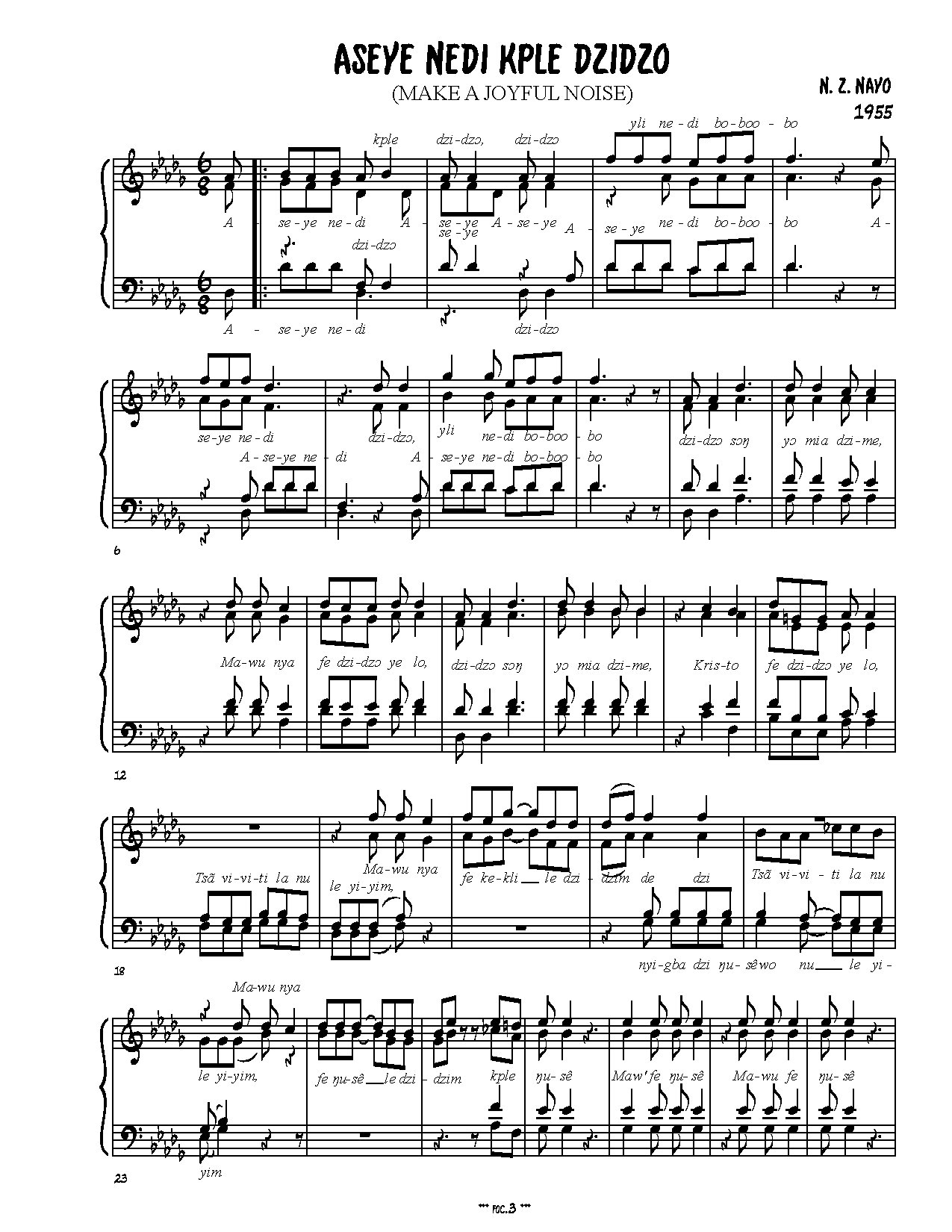
Aseye Nedi Kple Dzidzo
Staff Notation • Celebrations, Entrance songs, Recessional / Dismissal Hymns, Anthems
Subscribed as
Want Sunday picks sent to another address too?
Your choir should not be left out in what's trending
Sunday mass selections, psalms, and trending songs in your area — straight to your inbox.
Aseye Nedi Kple Dzidzo by N. Z. Nayo — Lyrics
About Aseye Nedi Kple Dzidzo
"Aseye Nedi Kple Dzidzo" is a vibrant Ewe choral anthem composed by N. Z. Nayo in 1955. The title translates to "Make a Joyful Noise," and the music perfectly captures that command. From the opening bars, the choir is invited to lift up a sound of pure, unrestrained gladness. It is a piece built on energetic rhythms and bright harmonies, designed to wake up the congregation and draw everyone into a spirit of thanksgiving.
In the choir loft, this anthem is a favorite for grand celebrations, feast days, and moments of high praise. The first section lays down a lively, rhythmic foundation, declaring the joy of God's word and the light of Christ driving away the darkness. Then, the piece breaks into a thrilling fugue. The voices chase each other, layering praises and repeating "tegbe tegbe" (forever and ever) in a cascading wave of sound.
Directors often program this for the Entrance or Recessional procession, where its driving tempo can carry the clergy and the people with a sense of triumph. Singing it requires stamina and precise timing, especially as the parts weave together in the final pages, but the result is a glorious, unified shout of praise that lingers long after the final chord.